How to View LinkedIn Without an Account: 9 Working Methods (2026)
You can view LinkedIn profiles without an account by searching Google with the operator site:linkedin.com/in plus a name, company, or city, then opening the result in an incognito tab. Other working methods include Bing or DuckDuckGo, loading the profile URL through Google Translate, and people-search aggregators like RocketReach, Apollo, or SignalHire.
If you’ve ever tried to view LinkedIn profile without logging in or without having an account, you know the second you click on a profile link you see a giant blue “Join LinkedIn” wall.
- Maybe you don’t want to sign up.
- Maybe you do have an account but you’re trying to stay off the radar.
Either way, LinkedIn is designed to push you into logging in. But with a few smart tricks, you can still get a decent amount of info without touching the “Sign up” button.
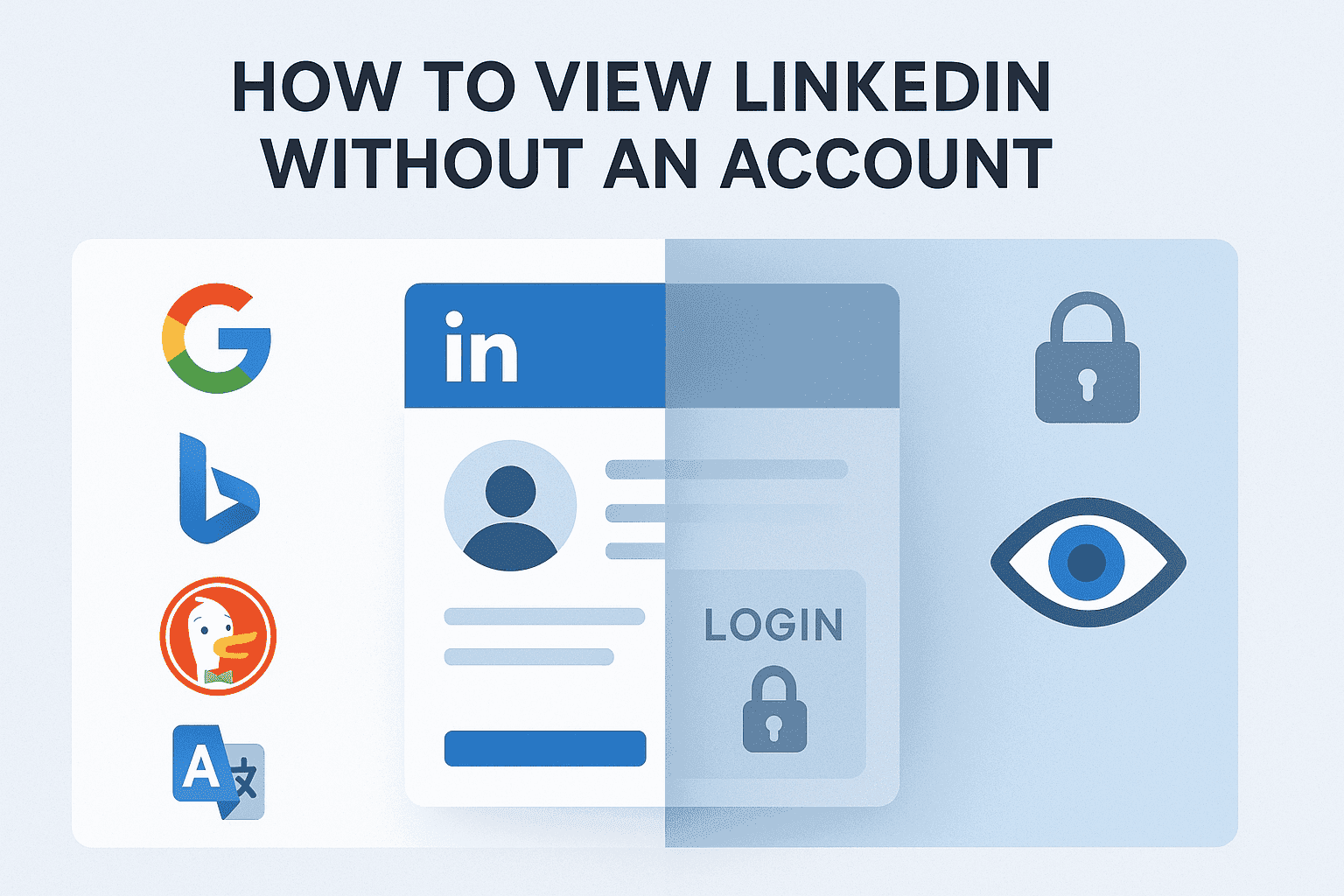
This guide shows you:
- Exactly what you can (and can’t) see without an account.
- 9 step-by-step methods that actually work in 2026.
- Privacy tips if you do have an account but want to browse ghost-style.
- The limits, ethics, and alternatives you should know.
Scale of the problem: LinkedIn now has over 1.2 billion registered members worldwide (Microsoft FY25 earnings, October 2025), and its public-facing pages pull roughly 1.77 billion monthly website visits (DemandSage / ShortsIntel, 2025). A huge slice of that traffic comes from people who hit a profile via Google without ever signing in, which is why the login wall feels so aggressive.
Quick shortcut: If you just need contact info from a LinkedIn profile, OutX’s email finder can pull verified emails and phone numbers without needing to log in or send a connection request.
Let’s jump in.
Quick Summary
Best fast method by situation (name known, employer known, role known)
- Know their name + company? → Google with "site:linkedin.com/in".
- Know only role + city? → Bing/DuckDuckGo search with quotes.
- Have the URL but blocked? → Run through Google Translate proxy.
Stay within legal and ethical boundaries
Use the info responsibly. Don’t mass-harvest. Don’t stalk.
At the end of the day, LinkedIn wants you logged in.
You can still pull the signal you need whether that’s confirming a job title, finding the right “John Smith,” or just satisfying curiosity without creating an account.
9 Working Methods to View LinkedIn Profiles
First clarify Will the profile owner know you viewed them without logging in?
Nope. If you’re not logged in, there’s no way LinkedIn can attribute a view to your identity. At most, they’ll see an anonymous “guest” hit in their analytics.
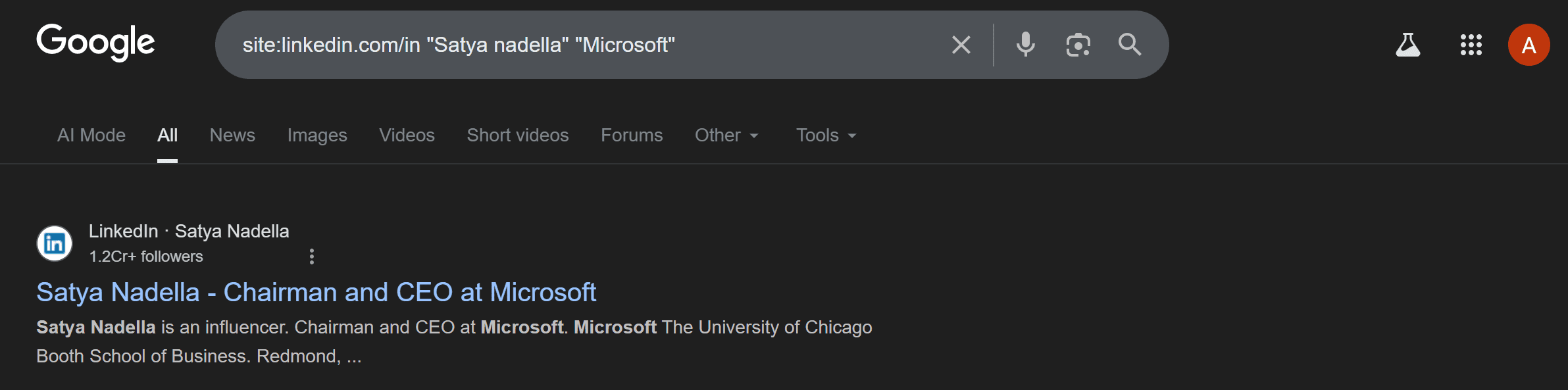
Method 1: Use Google search operators (site:linkedin.com/in)
This is the workhorse method.
Exact queries to try (name + company + location)
site:linkedin.com/in "John Smith" "Deloitte" "New York"
Breakdown:
- "site:linkedin.com/in" limits results to profile URLs.
- Add "name" in quotes.
- Add "company" or "school" for precision.
- Toss in "city" to cut down duplicates.
Open results in a new tab to avoid auto-redirects
Clicking straight from Google sometimes forces a login wall.
- Instead: - Right-click → Open link in new tab.
- Or copy the URL and paste into incognito.
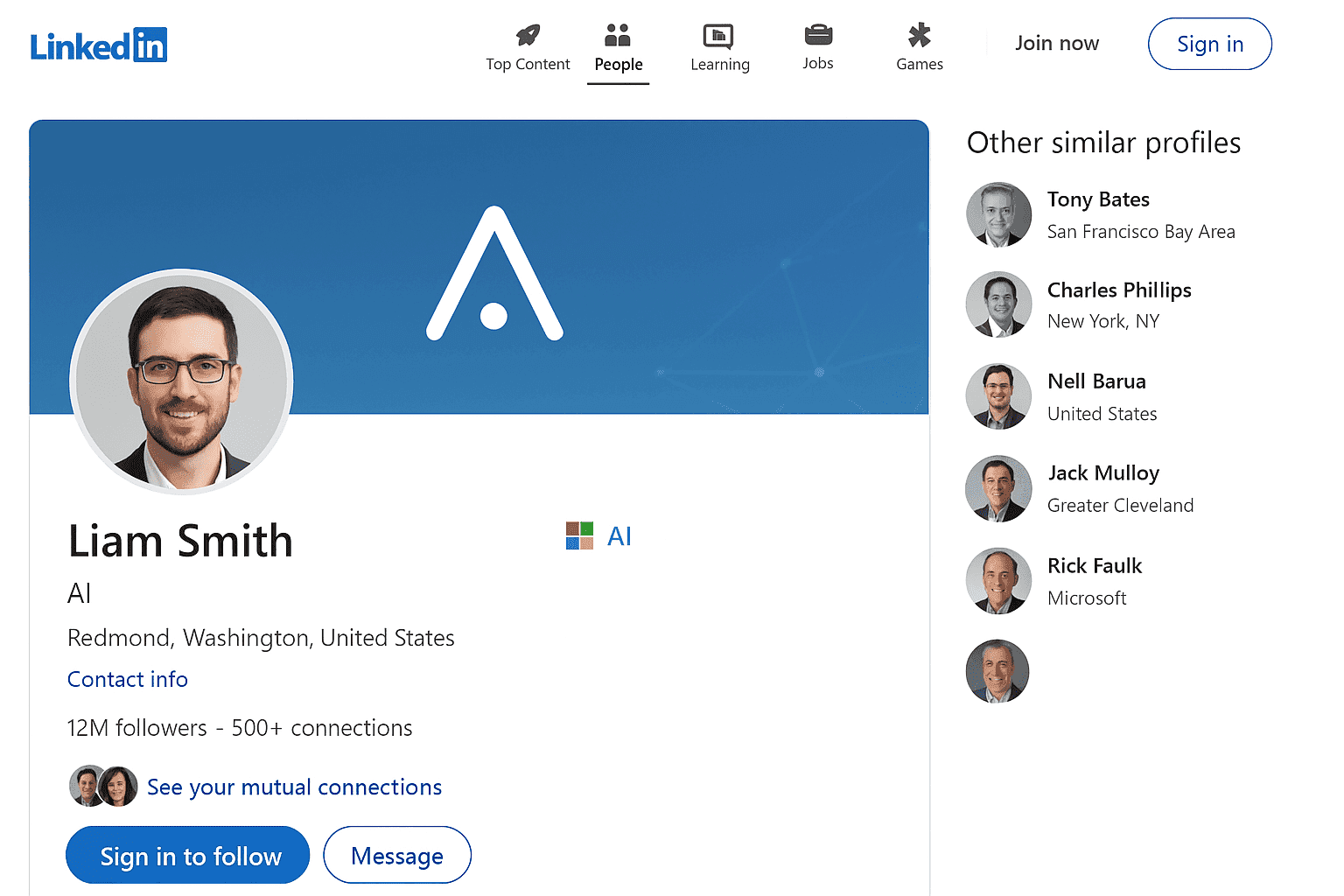
Troubleshooting when Google shows a login wall
If the profile instantly redirects:
- Hit “Cached” under the search result (if available).
- Clear cookies, switch to incognito, and retry.
- Or switch to another search engine (see next method).
Method 2: Use Bing, DuckDuckGo, or Brave Search for public profile previews
Google isn’t the only game in town.
-
Bing: often shows larger snippets of profile text. Try:
site:linkedin.com/in "Jane Doe" "Microsoft" -
DuckDuckGo: lighter on login walls, sometimes surfaces profiles hidden on Google.
-
Brave Search: pulls in alternative indexes good for newer profiles.
Pro tip: Don’t just search names. Try role keywords:
site:linkedin.com/in "product manager" "Stripe" "San Francisco"
Method 3: View via web translation proxies (Google Translate, Yandex Translate)
These act as a middleman between you and LinkedIn.
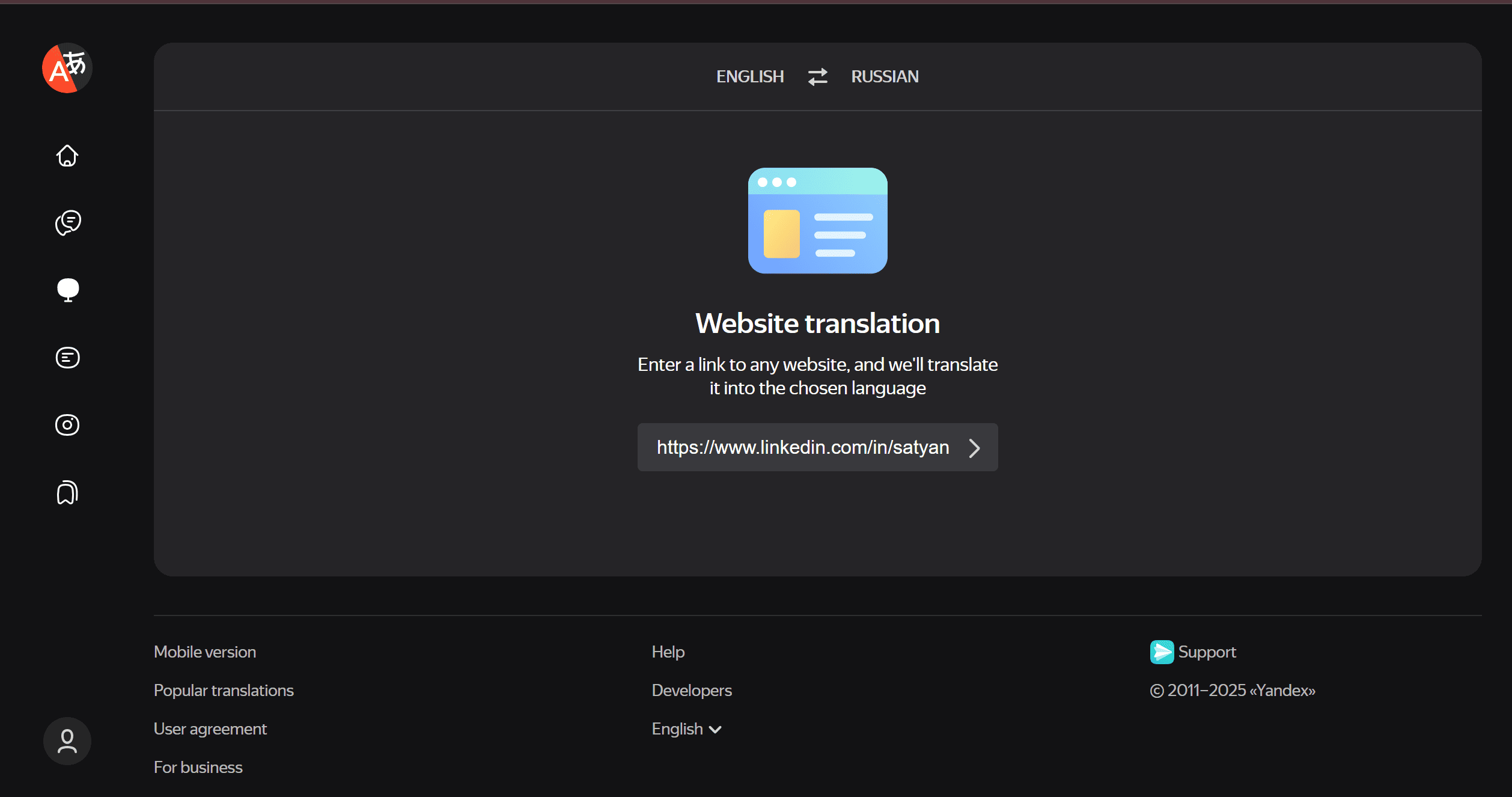
How to load a LinkedIn URL through a translator
- Copy the LinkedIn profile URL.
- Paste it into Google Translate.
- Pick any language (say English → Spanish).
- Click the translated link it loads via Google’s proxy.
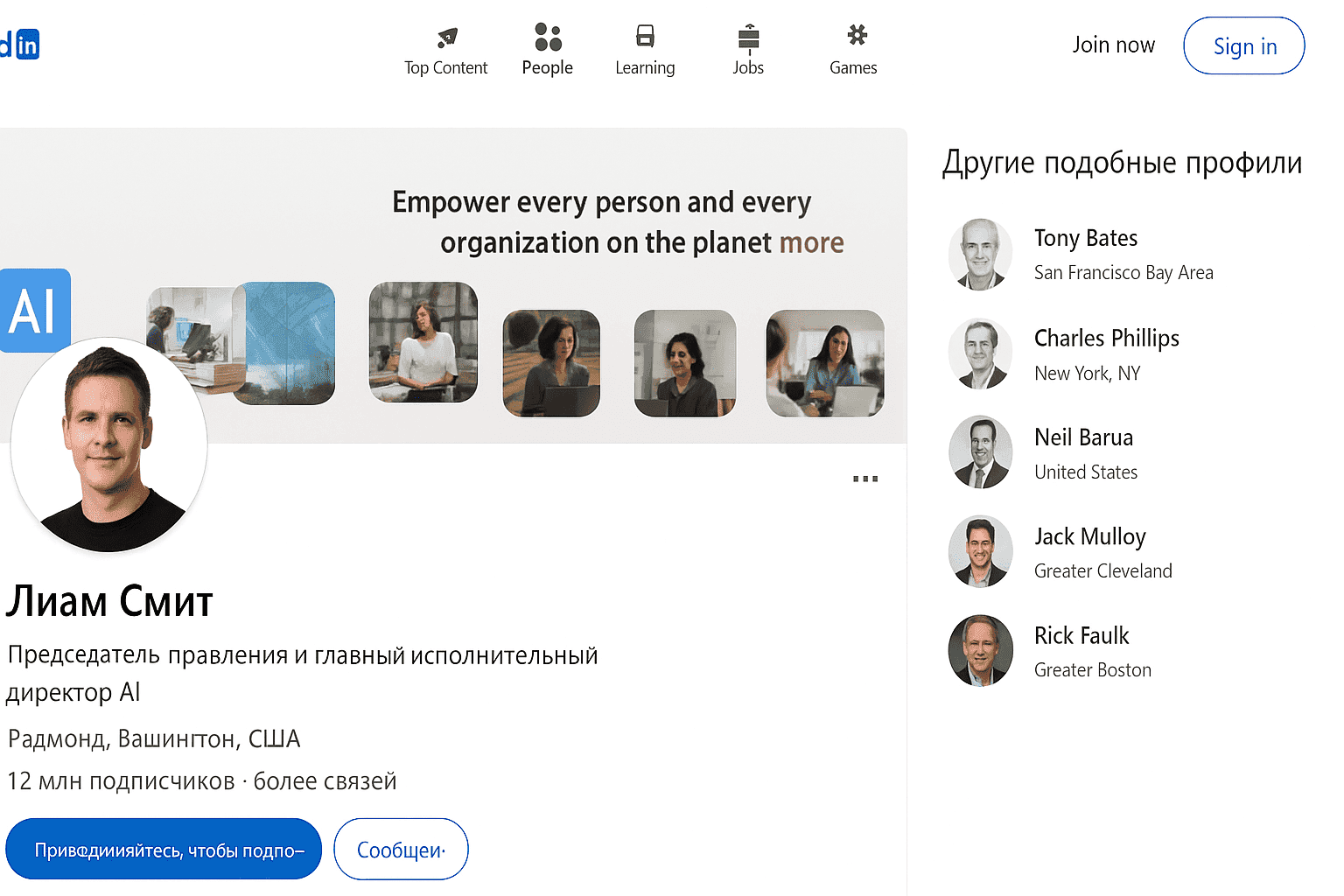
Common rendering limits and how to adjust language settings
- Some images or interactive blocks won’t render.
- Switch the target language back to English to make the page readable.
- Yandex Translate sometimes shows more content than Google.
Method 4: Use text-only readers and content fetchers for public pages
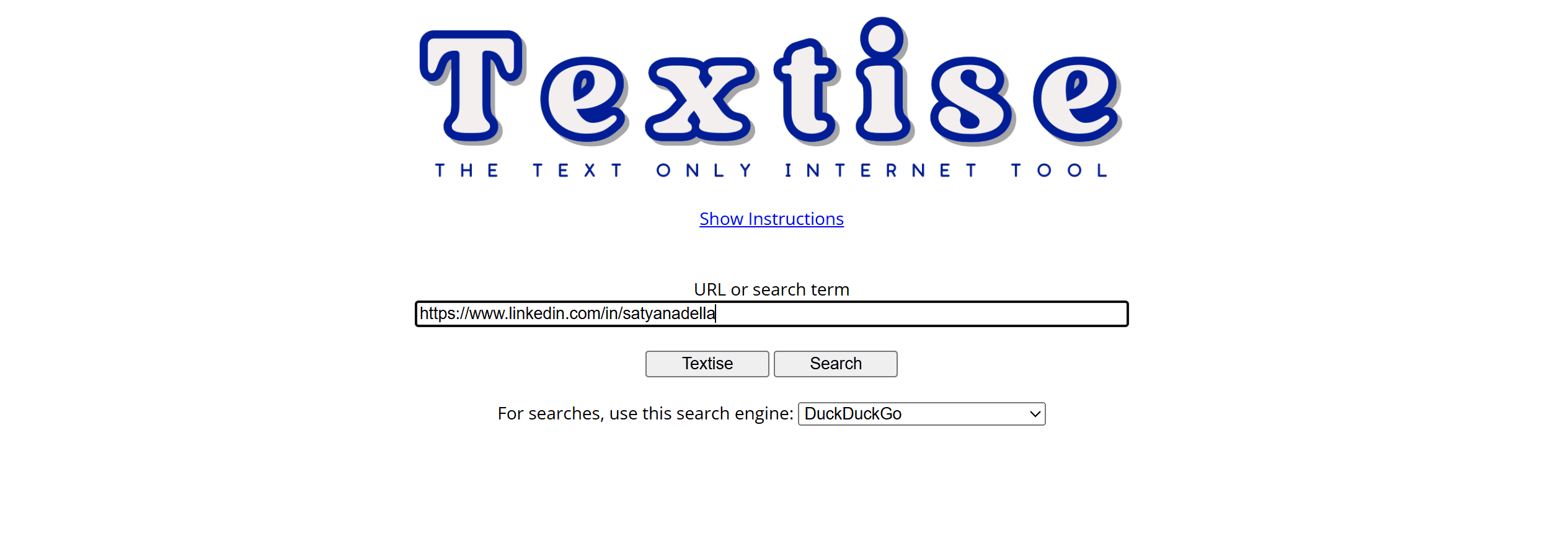
Think “strip everything except words.”
- Tools like textise dot iitty or Outline.com (when they still work) fetch the raw text.
- Upside: fast, minimal, no login popups.
- Downside: profile formatting breaks, and media (like profile photo) may not load.
This works best when you just want work history text.
Method 5: Find the person’s public vanity URL from other sources
Sometimes the hard part isn’t the wall it’s finding the right URL.
Where to look: company bios, conference speaker pages, personal sites
- Corporate “About Us” pages often link directly to LinkedIn.
- Event speaker bios: “Connect with Jane on LinkedIn.”
- Personal blogs or portfolios: check the footer.
Once you have the vanity URL "linkedin.com/in/janedoe123", plug it into the methods above.
Method 6: Use image search to locate the profile, then backtrack
Let’s say you know what they look like but can’t find the LinkedIn.
Reverse-image search tips (name + employer + city)
- Drop their headshot (from a company site) into Google Images.
- Add keywords: "John Doe" LinkedIn "Boston".
- This often surfaces their LinkedIn thumbnail.
From there, click through carefully in incognito.
Method 7: Try mobile or incognito for a one-time public preview
LinkedIn sometimes lets you see one “freebie” view.
Clear cookies, use private windows, and retry from a clean session
- Go incognito/private browsing.
- Paste the URL.
- If blocked, switch to your phone’s browser (different device = new session).
- Worst case: toggle airplane mode to refresh your IP.
Method 8: Check web archives or cached snapshots (when available)
Why caches often fail for LinkedIn and alternatives
- LinkedIn actively blocks Archive.org and Google Cache, so results are rare.
- Alternatives: niche scraping archives like cachedview dot com.
- If the profile is high-visibility (e.g., speaker, CEO), sometimes PR pages republish the same bio text.
Method 9: People-search aggregators that index public LinkedIn data
Sites like RocketReach, SignalHire, or Apollo pull in LinkedIn snippets. You can also find verified emails and phone numbers directly from LinkedIn profiles using OutX.
How to evaluate tools (privacy, accuracy, and ToS compliance)
- Accuracy: some still show 2021-era job titles.
- Privacy: avoid shady scrapers that require your own LinkedIn login.
- Compliance: use only for reference don’t mass-harvest.
How to Browse LinkedIn Anonymously
Sometimes the better move is: log in, but cloak yourself.
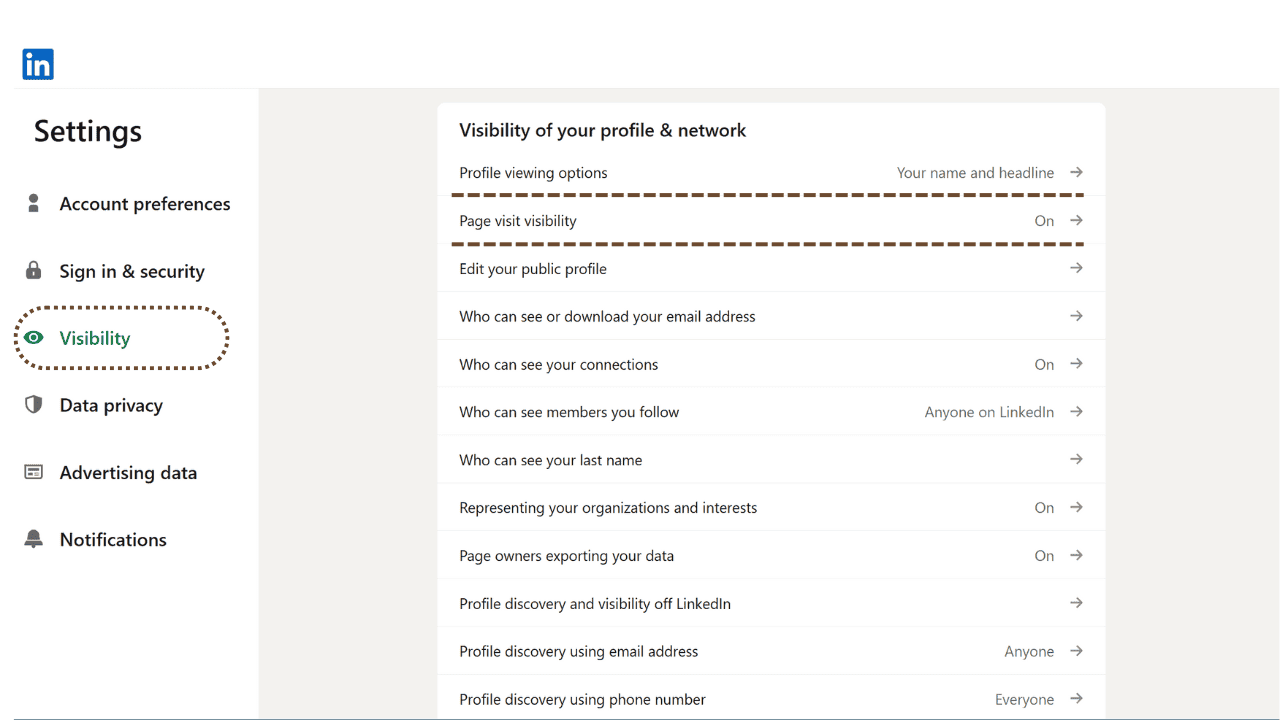
Enable LinkedIn Private Mode (desktop and mobile steps)
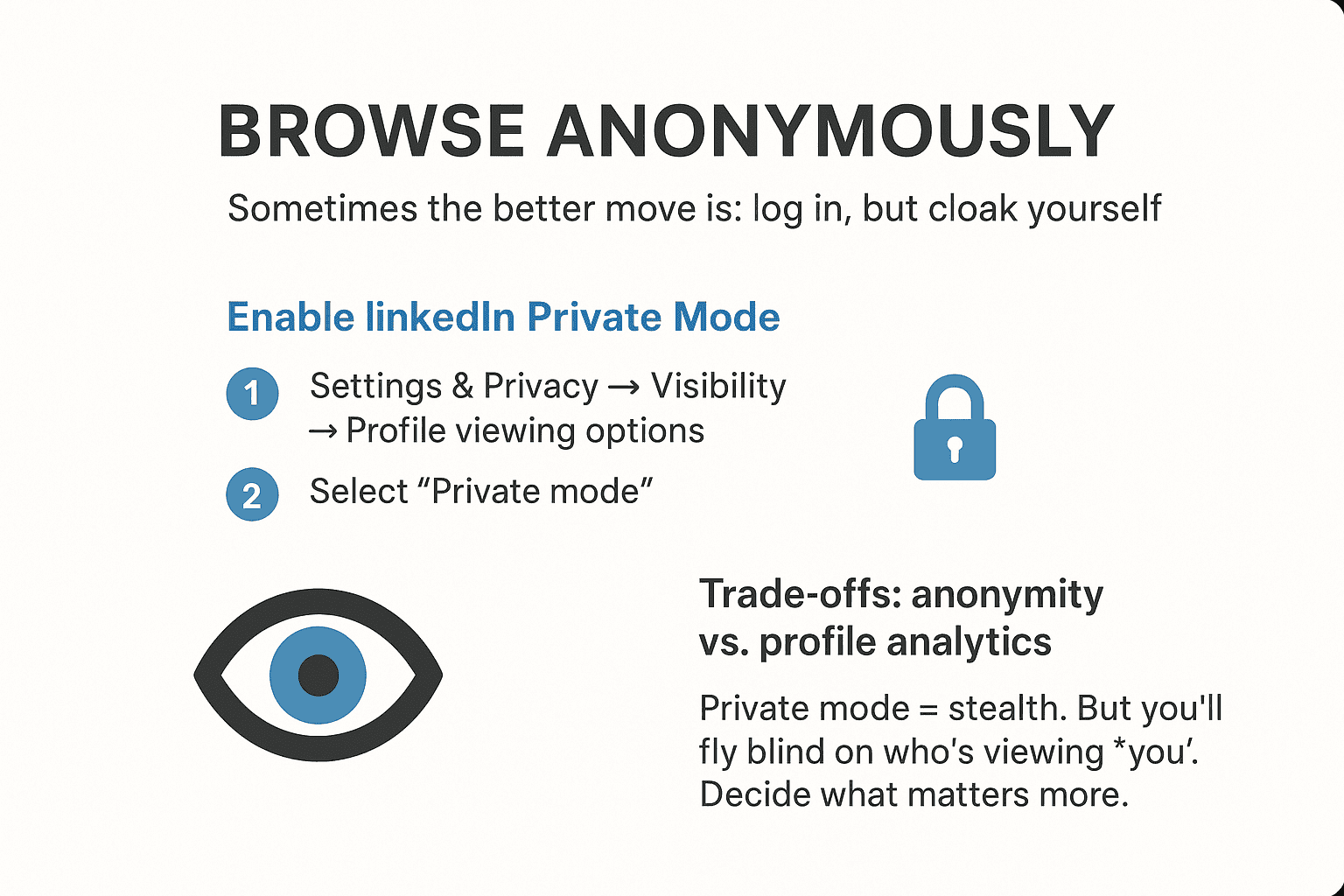
- Go to Settings & Privacy → Visibility → Profile viewing options.
- Select “Private mode.”
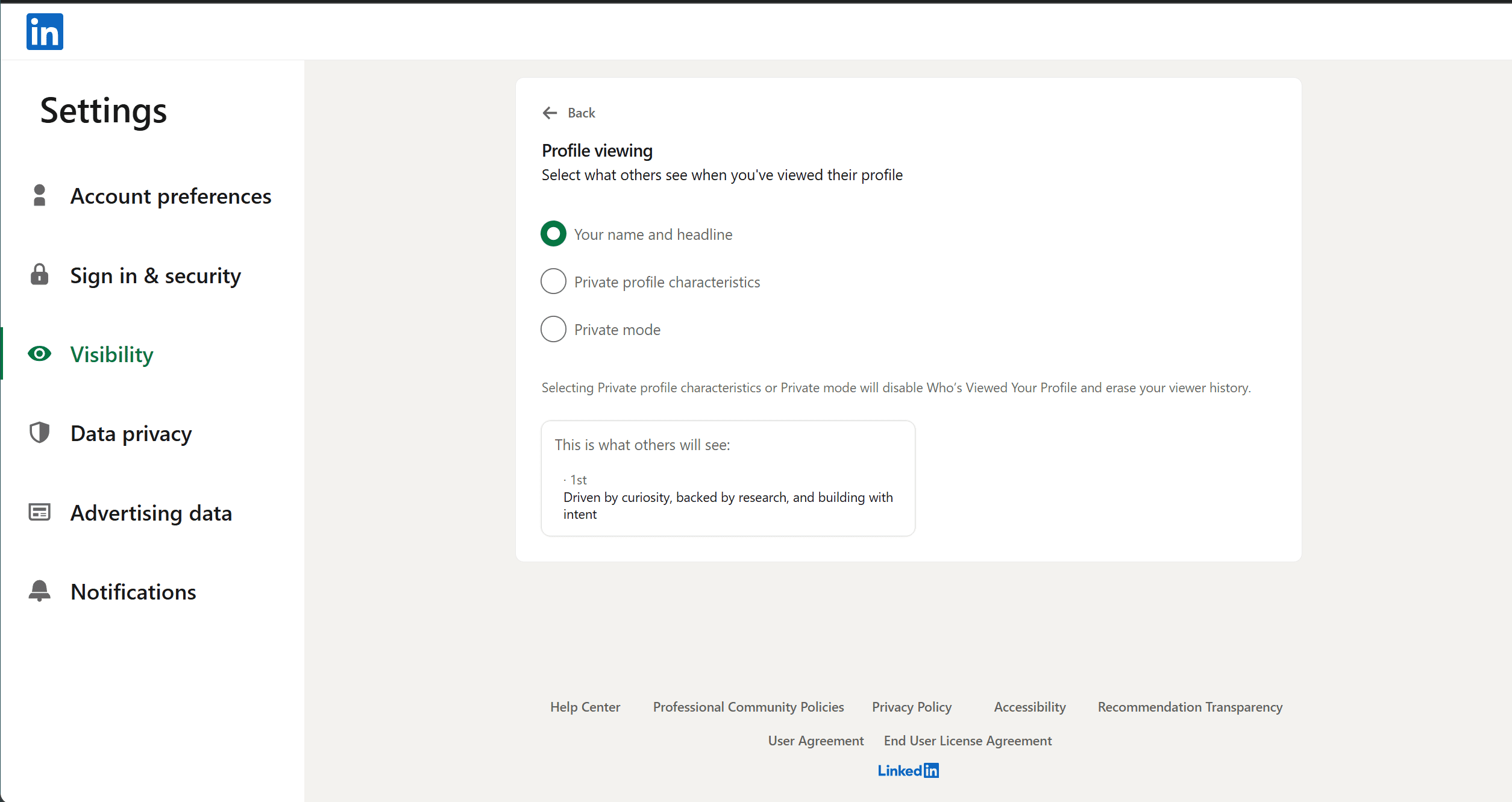
What changes in your ‘Who viewed your profile’ visibility
- They see only “Anonymous LinkedIn Member.”
- You lose access to your own viewer analytics. Trade-off.
Additional privacy settings to review (name, title, activity)
- Hide your last name (show only first + initial).
- Turn off “Share profile updates.”
- Restrict email and phone visibility.
Trade-offs: anonymity vs. profile analytics
Private mode = stealth. But you’ll fly blind on who’s viewing you. Decide what matters more.
Real-world examples: finding a profile without logging in
Example 1: Common name + employer filtering
“Michael Chen” is impossible to find.
Query:
site:linkedin.com/in "Michael Chen" "Goldman Sachs" "Hong Kong"
Now you’re down from 500 results to 2.
Example 2: Niche role + city to narrow results
“UX researcher” + “Toronto.” Works wonders.
Example 3: Using translation proxy to load a public page
Grab a URL, run it through Yandex Translate, and boom you see job titles + education with no login nag.
Ethical Limits and Compliance
Respecting LinkedIn’s Terms and robots.txt
LinkedIn’s ToS forbids scraping or automated harvesting. Manual one-off lookups? Generally tolerated. Bots? Risky. The stakes are real for both sides: a January 2026 Novorésumé survey of U.S. recruiters found that 86.1% of HR professionals check candidates' online presence at least occasionally before hiring, with 27.2% doing it consistently for every resume that passes initial screening (Herald-Tribune, 2026). LinkedIn protects guest-view access partly because professionals expect those views to stay private.
Regional blocks, IP throttling, and why rate limits happen
If you hammer too many profiles without logging in, LinkedIn throttles your IP. Use sparingly.
Ethical use of publicly available information
Golden rule: if the person chose to make it public, fine. If you’re digging via hacks that cross privacy lines don’t.
FAQs
Why do I still hit a login wall on public profiles?
Because LinkedIn constantly A/B tests how aggressively to push logins. Switch browsers or engines.
Can I view recommendations, endorsements, or full activity without an account?
No. Those are fully gated.
How do I view someone’s photo in higher resolution?
You can’t. LinkedIn compresses guest-view photos.
Does private mode completely hide me when I have an account?
Yes, but at the cost of your analytics.
Are third-party ‘LinkedIn profile viewer’ tools safe to use?
It depends on how the tool works. The key distinction is browser-based vs. server-based tools:
- Browser-based tools (like OutX’s profile viewer) run inside your browser. LinkedIn sees normal browsing activity, and your data stays on your device.
- Server-based tools route your requests through external servers, meaning a third party logs every profile you look up.
Here’s a quick comparison of the most common options:
| Tool | Type | Price | Truly Anonymous? | Your Data Stays Local? |
|---|---|---|---|---|
| OutX Profile Viewer | Chrome extension | Free / from $99/mo | Yes | Yes |
| LinkedIn Private Mode | Built-in | Free | Partial (LinkedIn still tracks internally) | Yes |
| Kaspr | Chrome extension | Freemium | Partial | No, data on their servers |
| SignalHire | Web + extension | From $39/mo | Partial | No, data on their servers |
| Free web viewers (SocialPlug, etc.) | Paste-and-view | Free | They claim yes | No, high risk, unclear data policies |
Bottom line: If anonymity matters, use a browser-based tool or LinkedIn’s Private Mode. Avoid free web-based viewers, when there’s no business model, your query data is likely the product.
Alternatives when LinkedIn shows nothing
Check other networks and sources (X/Twitter, GitHub, personal sites)
Plenty of professionals keep Twitter threads or GitHub repos updated more than LinkedIn.
Look up press releases, podcasts, talk bios, and conference pages
If they’ve spoken at events, their bio is usually syndicated word-for-word.
Ask for a resume or public profile PDF when appropriate
For recruiting or partnerships, just ask directly. Saves time.
Once you have found the right people, the next step is keeping track of them. Our guide to LinkedIn social listening shows how to monitor prospects and catch buying signals automatically.