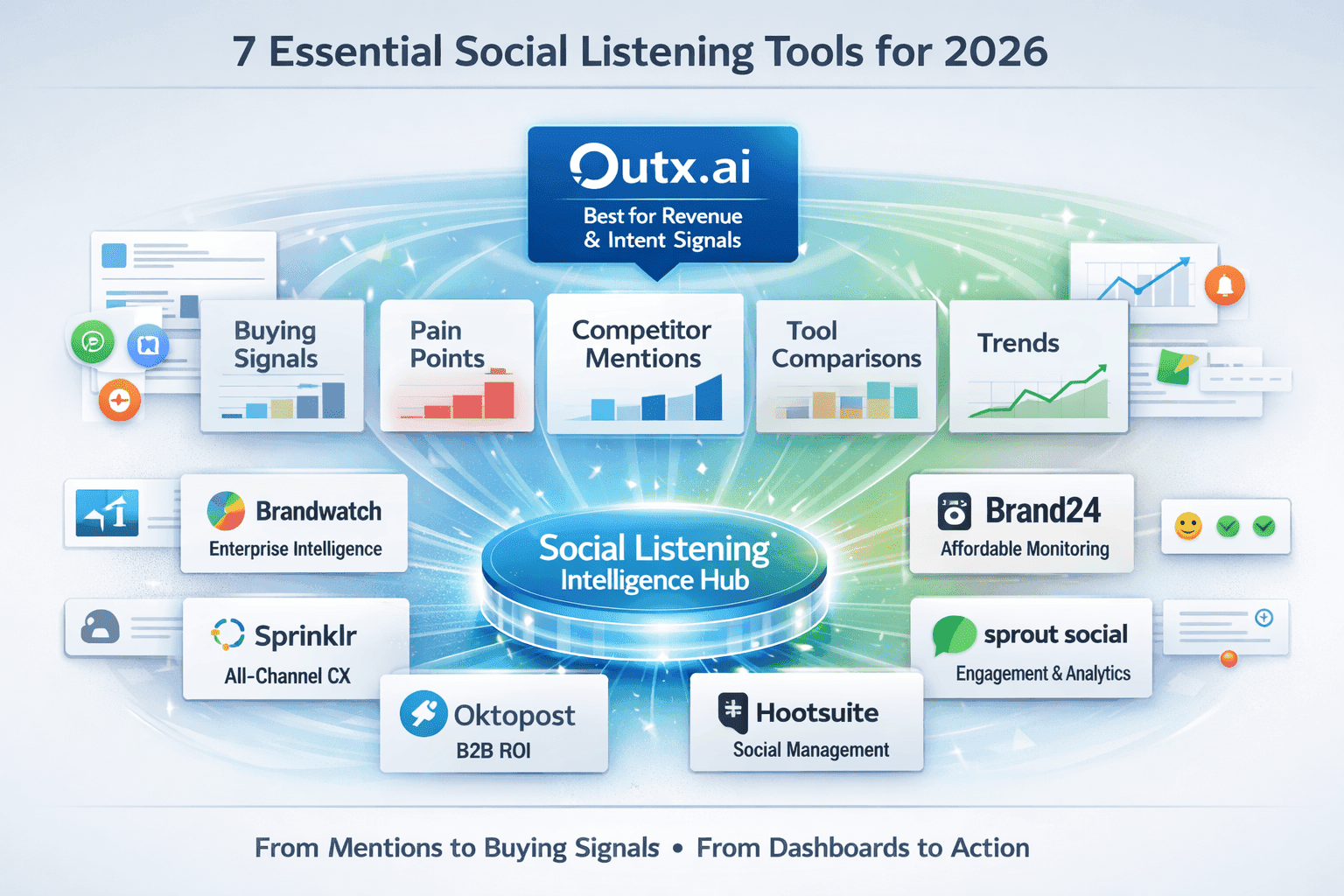
Social Listening in 2026: How Smart Teams Turn Noise Into Decisions
Social listening in 2026 isn't about collecting mentions.
It's about reducing uncertainty.
Every day, your market tells you what it wants, what it hates, and what it's about to buy. Most brands hear the noise. The smart ones extract the signal and act faster than everyone else with tools like OutX.ai's social listening platform.
Think of social media like a live radio frequency:
- Customers tune in constantly
- Signals spike before outcomes
- And the brands that adjust fastest win attention, trust, and revenue
If your system stops at "we saw a spike", you're already behind.
The advantage now belongs to teams that move from listen → decide → act in one loop.
That's where modern, AI-driven social listening comes in and why tools like OutX.ai exist.
What Can Social Listening Do for Your Business?
Social listening doesn't give you more data.
It gives you better decisions.
Most companies don't struggle because they lack information.
They struggle because they react too late or act on the wrong signals.
In 2026, social listening fixes that problem by doing one thing exceptionally well:
It turns unstructured conversation into structured advantage.
When done right, social listening becomes a business function, not a marketing experiment. It feeds leadership, product, sales, support, and growth with the same source of truth what the market is already telling you.
Let's break down what that actually means.
1. Brand health becomes measurable (not anecdotal)
Every brand thinks it knows how it's perceived.
Very few can prove it.
Social listening replaces gut feelings with signal clarity:
- Are people talking about you more or less this month?
- Is the tone improving or decaying?
- Which topics drive trust and which erode it?
In 2026, brand perception changes fast. One creator post. One bad rollout. One viral comment thread.
Without listening, you notice after performance drops.
With listening, you see it as it forms.
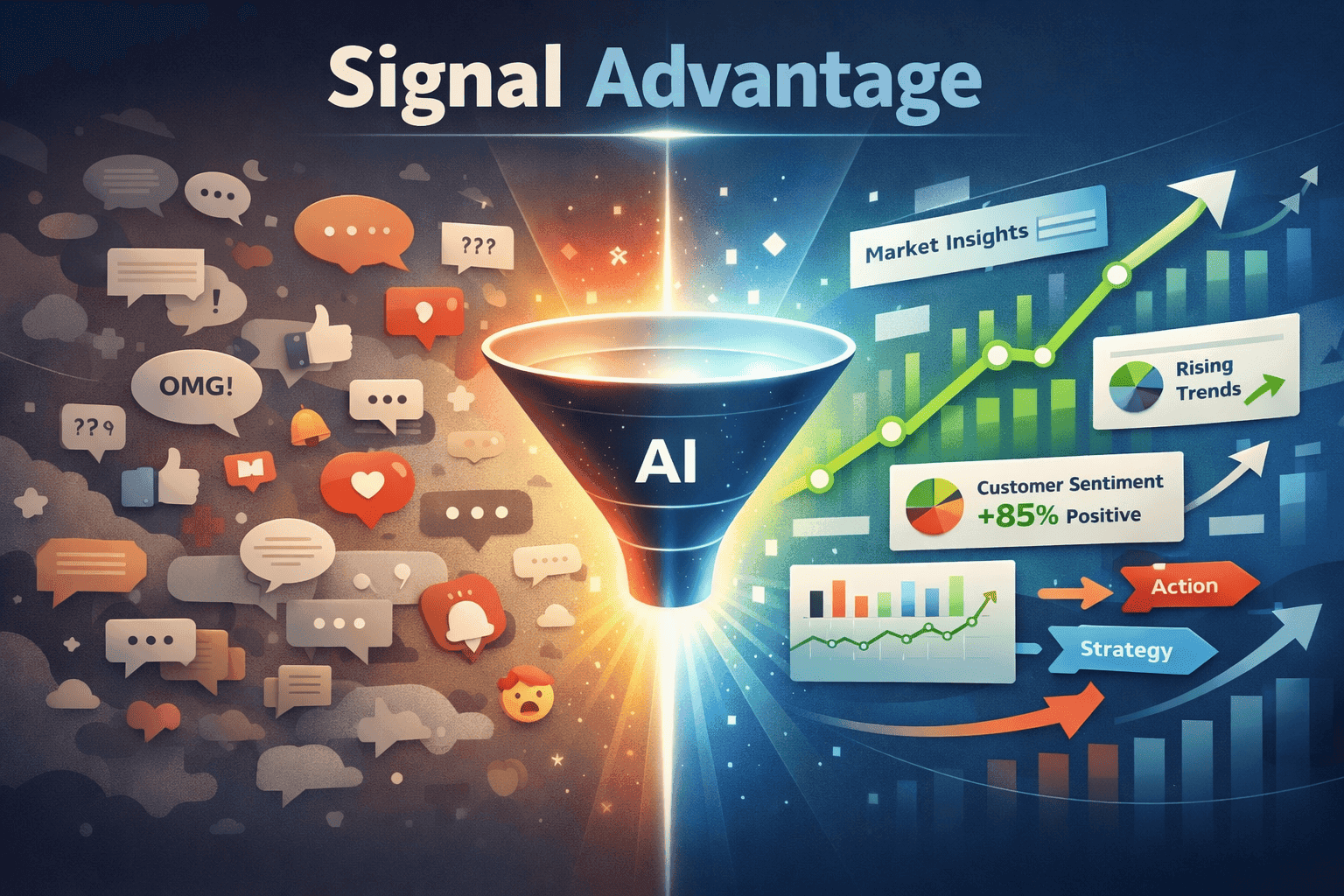
Modern platforms don't just label sentiment as "positive" or "negative."
They surface why sentiment moved:
- Pricing confusion
- UX friction
- Messaging misalignment
- Feature expectations
This is where AI-powered tools like OutX.ai shift the game by summarizing thousands of conversations into a single, readable insight your team can actually act on.
Brand health stops being a quarterly slide.
It becomes a daily pulse.
2. Competitive intelligence without espionage
Your competitors' customers are already telling you what works.
Publicly.
On social media, forums, review platforms, and comment sections.
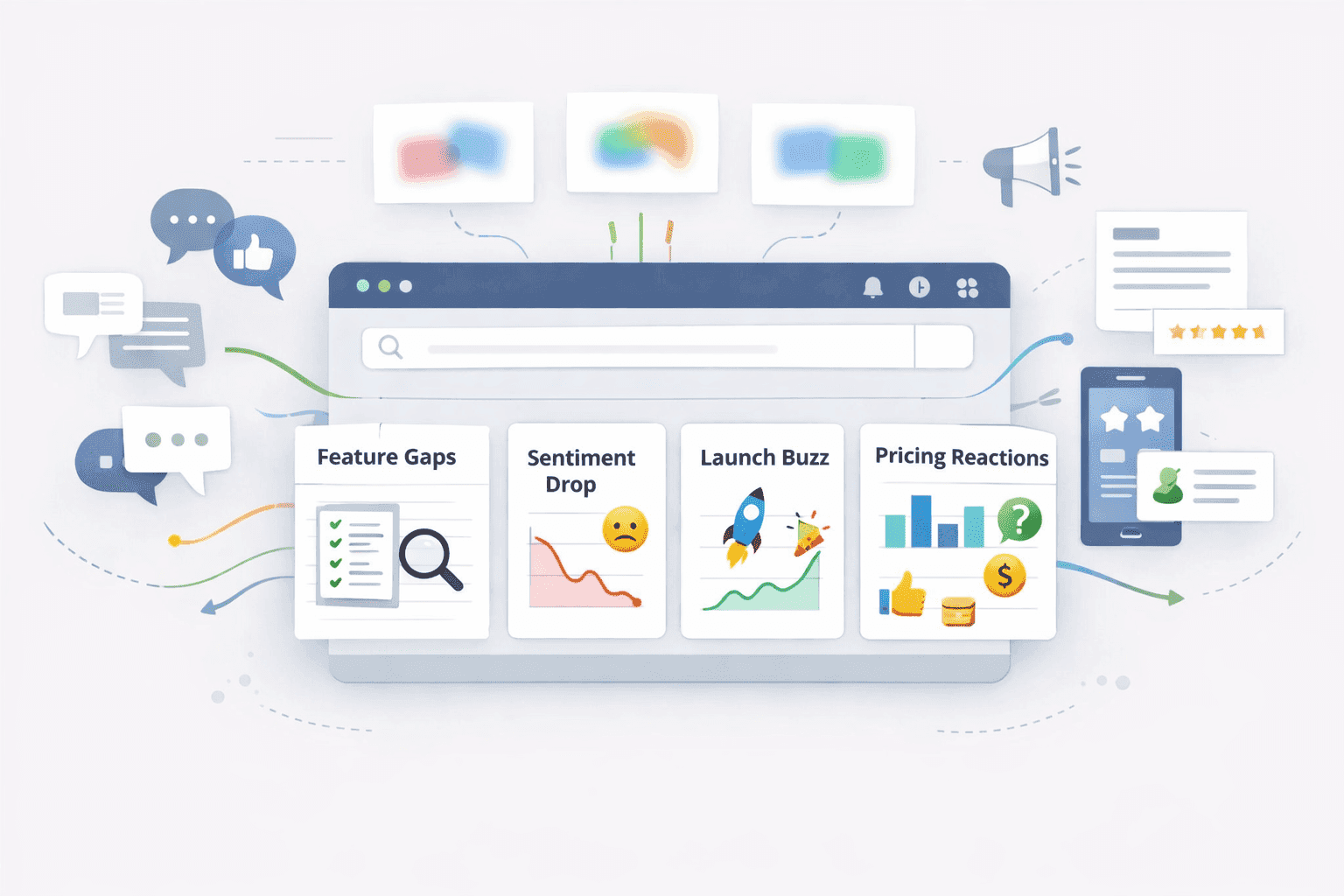
Social listening lets you:
- Track competitor mentions in real time
- Identify feature gaps users complain about
- Spot launches before press releases
- Measure sentiment swings after announcements
The biggest mistake teams make is benchmarking results instead of reactions.
Revenue numbers lag.
Customer reactions lead.
If sentiment drops around a competitor's new feature, that's an opportunity.
If excitement spikes around a pricing change, that's a warning.
Competitive listening isn't about copying.
It's about positioning faster than the rest of the market.
3. Trends surface before dashboards move
Trends don't announce themselves.
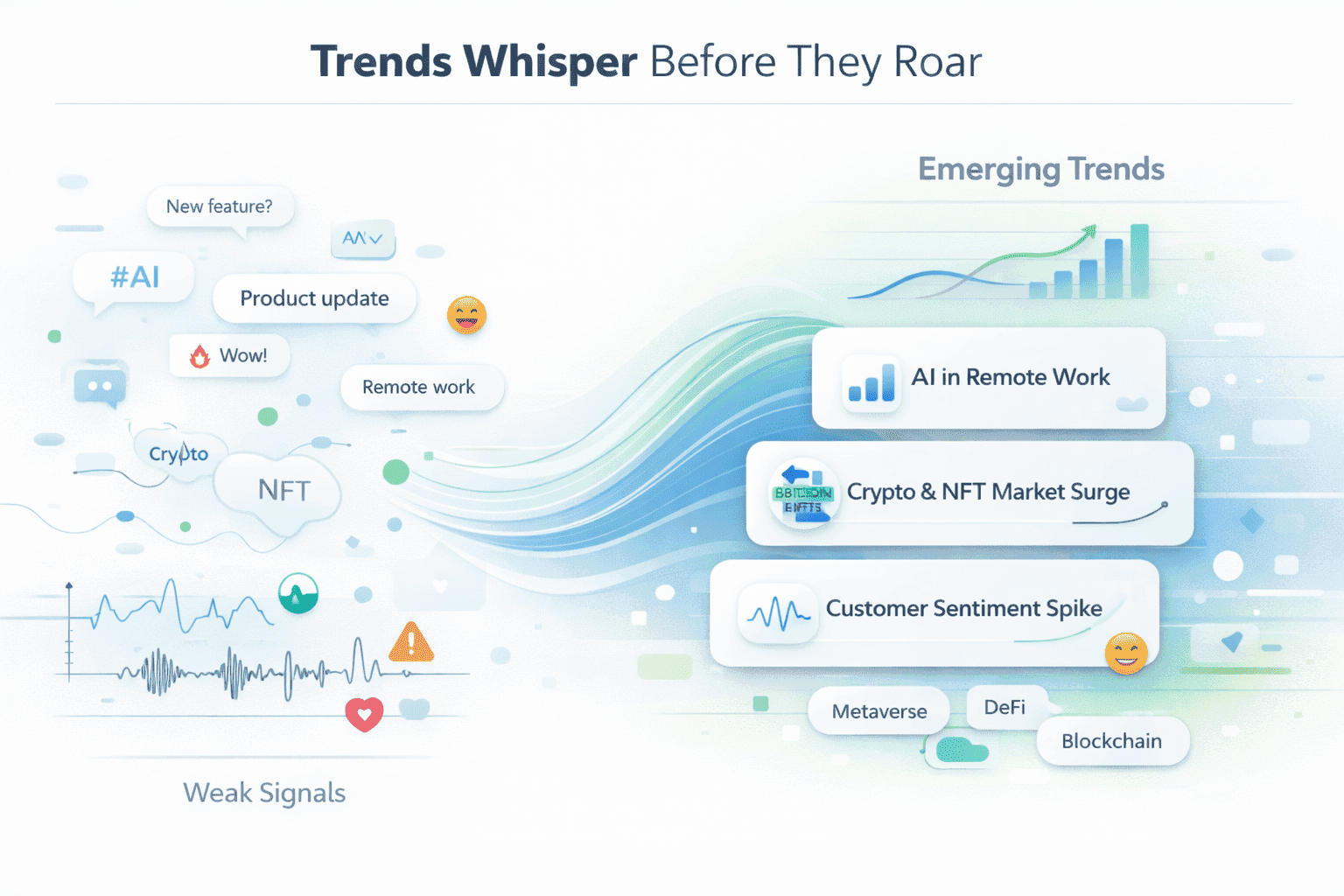
They whisper first.
A few repeated phrases.
A new hashtag.
A shift in how customers describe their problem.
Social listening captures these weak signals early and clusters them into patterns.
This matters because:
- Content teams publish before topics saturate
- Product teams validate demand before building
- Growth teams align messaging with emerging language
In 2026, trend detection is no longer manual scanning or "Twitter intuition."
It's algorithmic pattern recognition at scale.
AI-driven listening platforms identify:
- Sudden increases in topic velocity
- New keyword combinations
- Emotional spikes tied to specific events
The result?
You stop reacting to trends and start entering them early.
4. Customers write your product roadmap (if you let them)
Every product team wants feedback.
Most get it too late.
Social listening changes that by capturing feedback where customers are most honest public conversations with no survey bias.
Instead of asking:
"What do you think of Feature X?"
You observe:
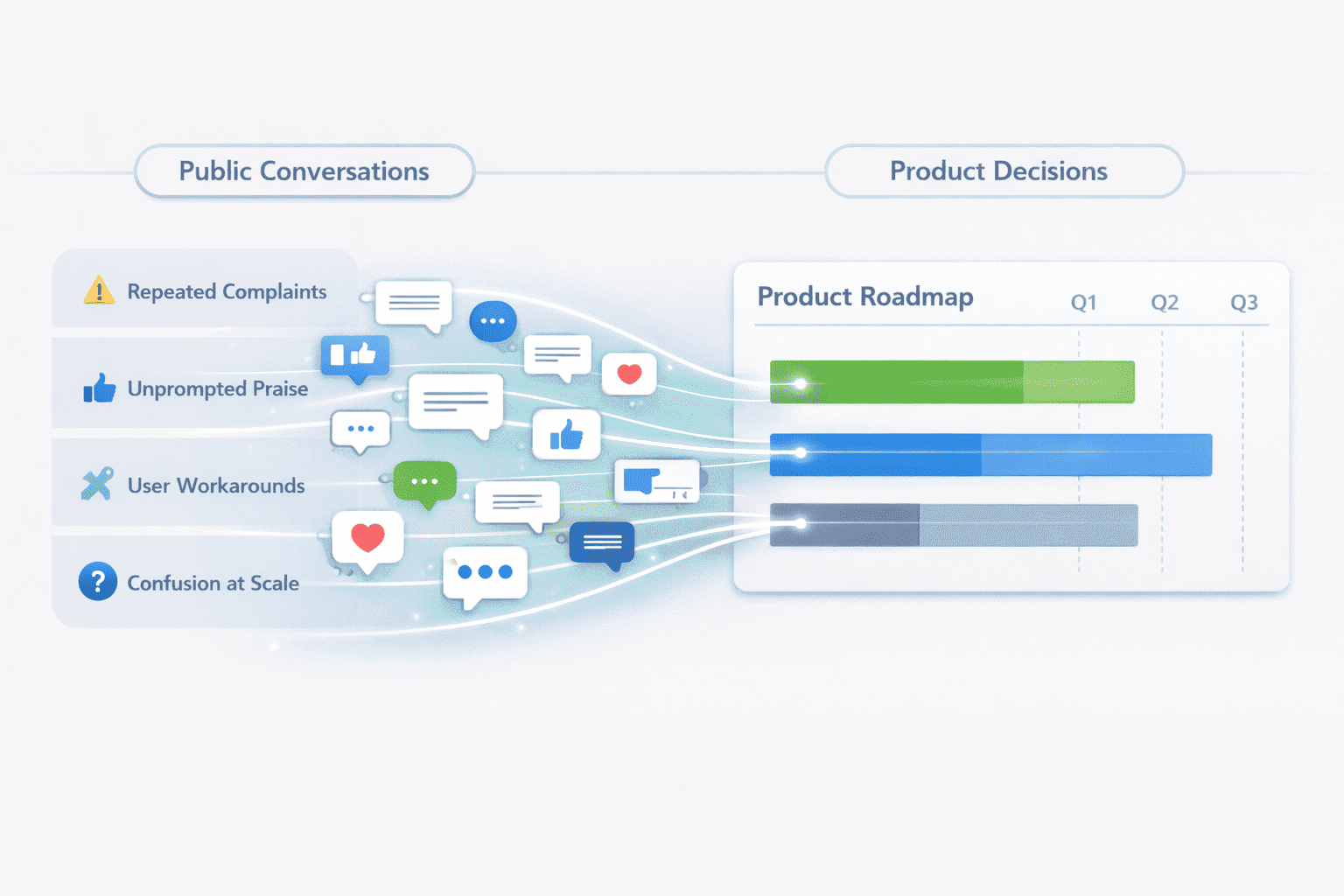
- What users complain about repeatedly
- Which features they praise unprompted
- What workarounds they're inventing
- Where confusion shows up at scale
When these signals are grouped and summarized automatically, product decisions stop being opinion-driven.
They become evidence-backed.
Teams using listening data effectively:
- Prioritize fixes with the highest emotional impact
- Validate roadmap decisions before development
- Reduce churn caused by "small but loud" friction points
Social listening doesn't replace user research.
It amplifies it continuously.
5. Crises become manageable instead of catastrophic
Most brand crises don't start big.
They start as:
- A frustrated customer thread
- A critical forum post
- A sarcastic comment that gains traction
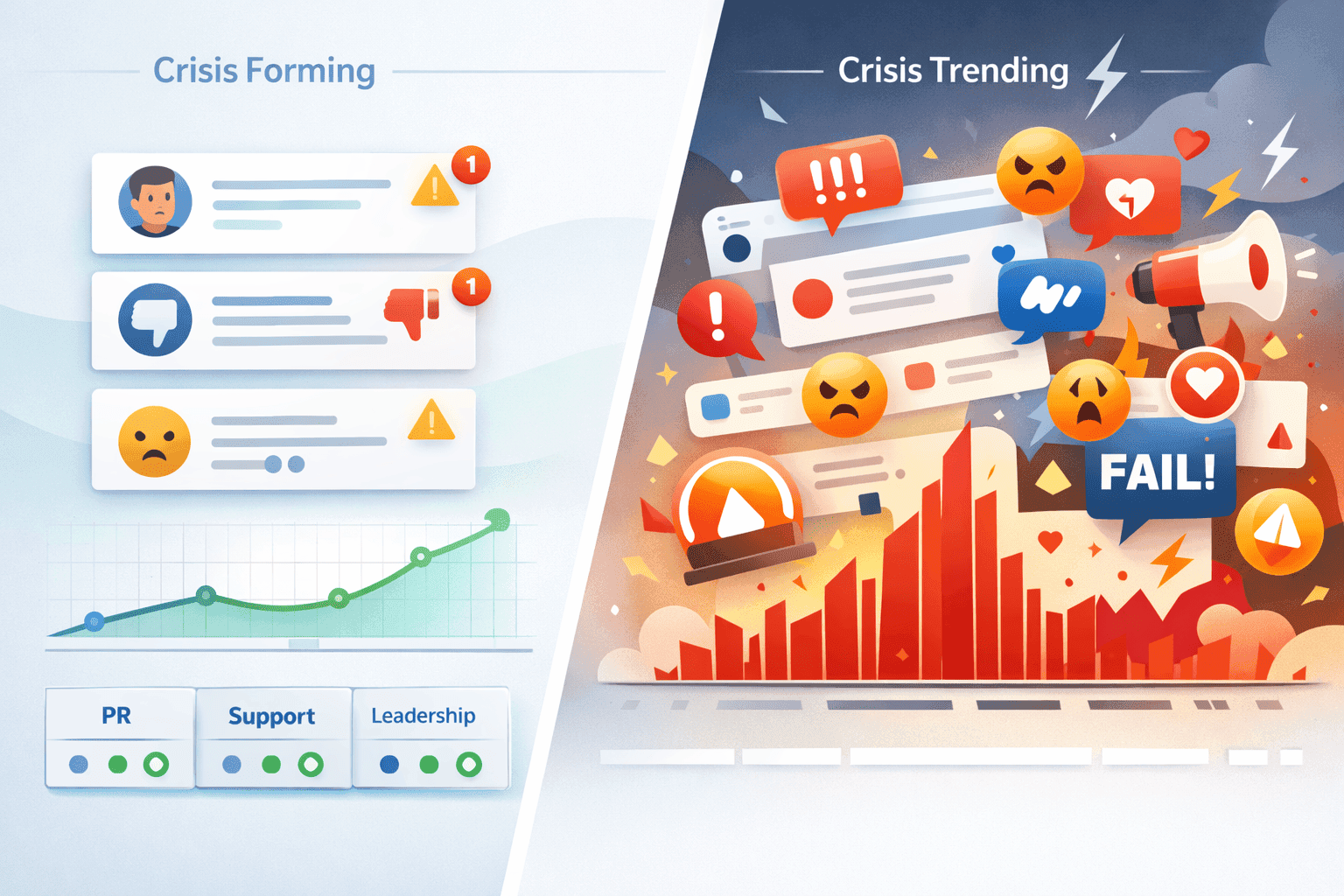
Without listening, you find out when it's trending.
With listening, you find out when it's forming.
Real-time alerts tied to sentiment shifts and volume spikes give teams a head start:
- PR teams prepare responses early
- Support teams step in proactively
- Leadership avoids being blindsided
In 2026, response time is reputation currency.
The brands that survive crises best aren't quieter.
They're faster and more informed.
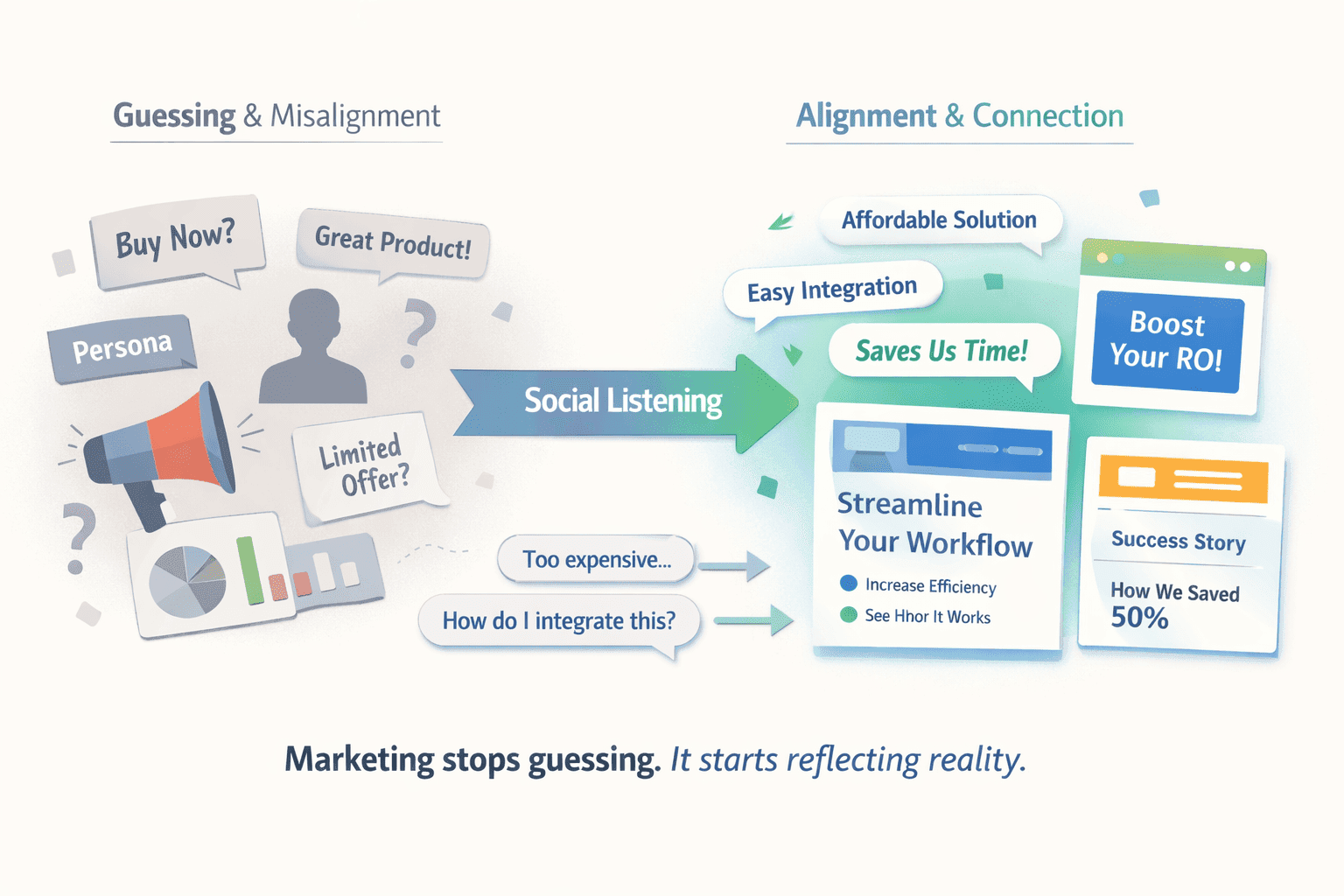
6. Marketing stops guessing and starts aligning
Marketing doesn't fail because of bad creativity.
It fails because of misalignment.
Social listening fixes that by aligning messaging with real customer language:
- The words customers actually use
- The objections they repeat
- The outcomes they care about
This impacts:
- Ad copy that converts
- Landing pages that resonate
- Content that gets shared
When campaigns are informed by listening data:
- Engagement increases
- Message-market fit improves
- Attribution becomes clearer
Marketing stops pushing narratives.
It starts reflecting reality.
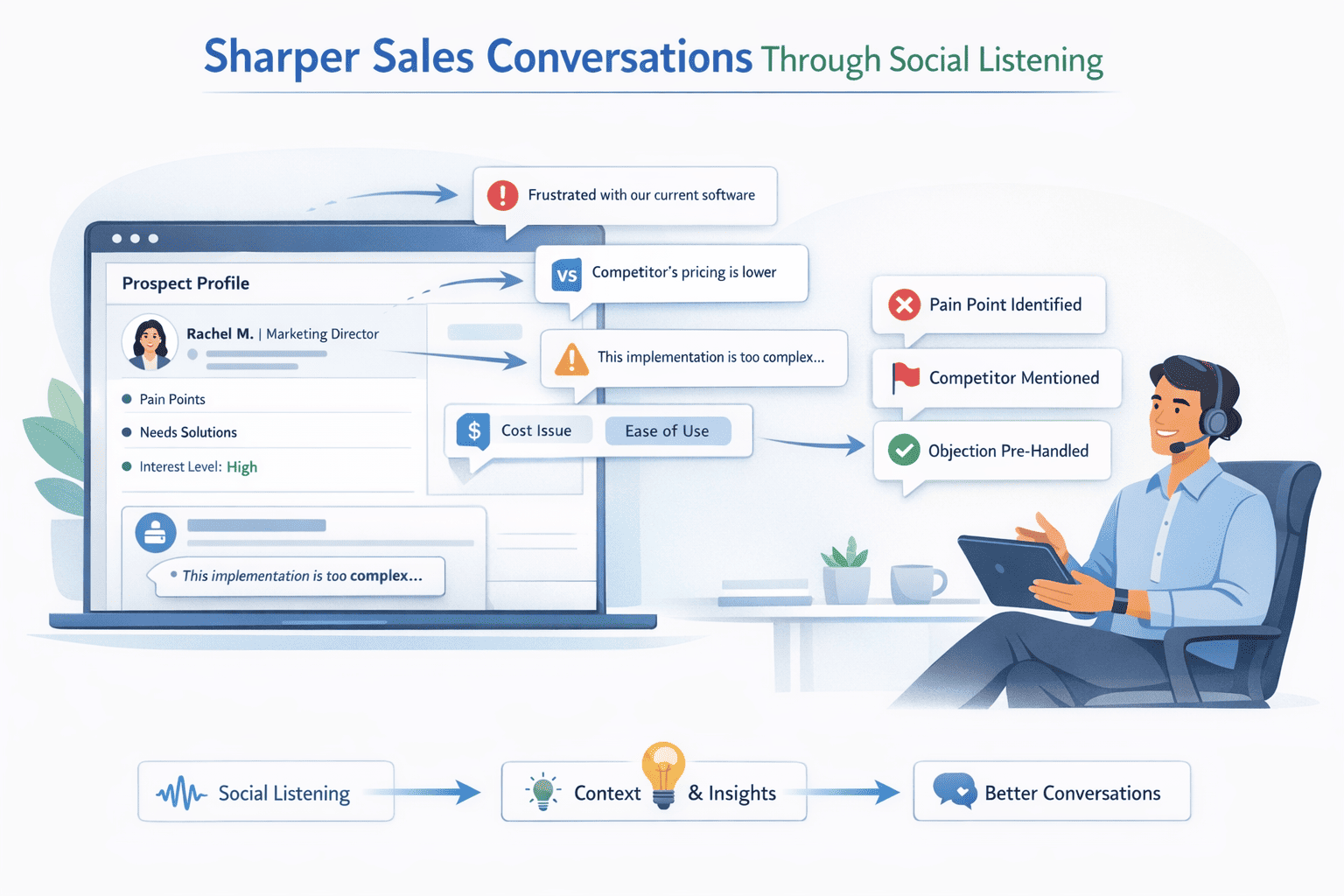
7. Sales conversations get sharper
Sales teams don't need more leads.
They need better context.
Social listening provides that by revealing:
- What prospects complain about before buying
- Which competitors they compare you to
- What objections show up repeatedly
When listening insights flow into CRM systems:
- Reps personalize outreach more effectively
- Objections are handled proactively
- Discovery calls start deeper
This shortens sales cycles and increases close rates not by working harder, but by listening earlier.
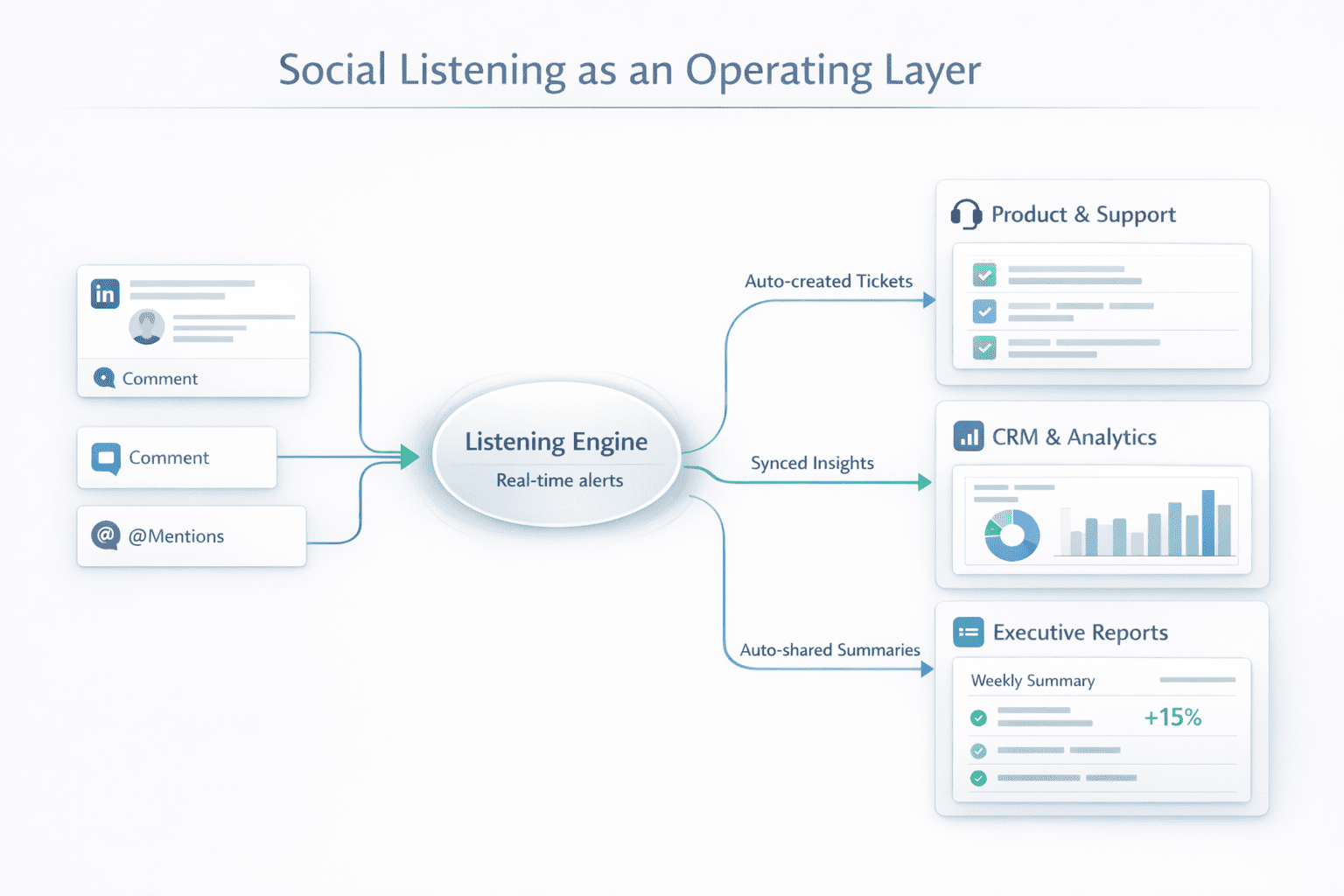
8. Social listening becomes an operational layer
The biggest shift in 2026?
Social listening is no longer siloed in marketing.
It's embedded across the business:
- Alerts trigger tickets in product and support tools
- Insights sync with CRM and analytics stacks
- Summaries are shared automatically with leadership
This turns listening into an operating system, not a dashboard.
The best teams don't ask:
"What did social say?"
They already know because it's built into how decisions get made.
How to Build a Social Listening Strategy in 5 Steps
Most social listening programs fail for one reason:
They start with tools instead of intent.
Dashboards get built. Keywords get added. Alerts start firing.
And six weeks later, no one knows what decisions this data is supposed to inform.
A strong social listening strategy isn't complex.
It's disciplined.
Think of it as a loop not a project:
Spot → Interpret → Act → Learn → Refine
Here's how to build it properly in 2026.
Step 1: Define the decision before you define the data
If you can't answer "what will we do differently because of this?"
You're not ready to listen yet.
Start with one business decision you want social data to influence.
Examples:
- Improve brand perception around a specific product line
- Reduce churn driven by onboarding confusion
- Catch negative sentiment before it escalates
- Validate demand for a new feature or positioning
Then make it measurable.
Bad goal:
"Track brand sentiment."
Good goal:
"Increase positive sentiment around 'eco-friendly packaging' by 15% in Q3 and correlate it with conversion lift from social traffic."
Why this matters:
Listening without a goal produces interesting insights.
Listening with a goal produces action.
Every metric you track after this point should ladder up to that decision.
Step 2: Choose a platform that connects insight to action
In 2026, the listening tool itself isn't the differentiator.
Integration is.
Your platform must do three things well:
- Capture conversations in real time
- Interpret them using AI (not manual tagging)
- Push insights directly into the tools your teams already use
If insights live in a separate dashboard, they die there.
Modern platforms like OutX.ai are built around workflow, not vanity metrics. That means:
- Alerts sync with CRM, support, and product tools
- Summaries are readable by non-analysts
- Insights are shareable across teams instantly
Ask one critical question before committing to a platform:
"How fast can this insight become an action?"
If the answer is "after our weekly review," keep looking.
Step 3: Build queries that reduce noise, not increase volume
Most teams over-listen.
Too many keywords.
Too many mentions.
Too little signal.
Your goal isn't coverage.
It's clarity.
Start with three query buckets:
- Brand & product terms
- Brand name variations
- Product names
- Common misspellings
- Category & problem language
- How customers describe the problem you solve
- Non-branded phrases
- Competitor-adjacent terms
- Emotion & intent markers
- Words that signal frustration, delight, confusion
- Purchase intent phrases
- Comparison language
Then aggressively exclude noise:
- Job posts
- Spam phrases
- Irrelevant industries
- Generic terms with no intent
Example of a focused query mindset:
Capture fewer mentions but ensure every one is decision-relevant.
Platforms like OutX.ai make this easier with topic builders and AI clustering, so queries evolve based on actual conversation patterns not guesswork.
Step 4: Turn insights into narratives, not charts
Data doesn't drive action.
Stories do.
Your listening output should answer:
- What changed?
- Why did it change?
- What should we do next?
Instead of saying:
"Negative sentiment increased by 6% last week."
Say:
"Negative sentiment rose after users encountered friction during checkout on mobile, driven primarily by payment failures in India."
That's a decision-ready insight.
In 2026, AI-assisted summarization is non-negotiable.
Teams don't have time to interpret raw data.
The best listening systems automatically surface:
- Root causes behind spikes
- Emotional drivers (not just polarity)
- Segment-level differences (region, role, platform)
When insights are clear, leadership pays attention.
When they're vague, they get ignored.
Step 5: Close the loop with automated action
Listening without action is surveillance.
The final step is where most teams break.
Set up rules, not reminders.
Examples:
- If negative sentiment crosses a threshold → open a support or product ticket
- If competitor mentions spike → notify sales enablement
- If a new theme gains velocity → flag content and product teams
The goal is simple:
Every meaningful signal should trigger a response automatically.
Then review outcomes monthly:
- Did sentiment recover?
- Did engagement improve?
- Did churn decrease?
If not, refine queries, thresholds, or actions.
Listening is never "done."
It's tuned continuously.
Social Listening Examples: Real Wins from Real Brands
Frameworks are useful.
But examples are what make ideas stick.
Because social listening doesn't create value in theory.
It creates value when one signal changes one decision and that decision compounds.
Below are four real-world scenarios that show what happens when teams move from monitoring to acting. Different industries. Different goals. Same pattern:
One overlooked data point → one fast decision → outsized impact.
Eco-Tech Co.: When sentiment shifted before sales did
The situation
Eco-Tech Co. positioned itself as a sustainability-first hardware brand. Internally, leadership felt confident about its packaging strategy. Externally, the market was quieter but not positive.
The listening insight
After a competitor launched a "fully biodegradable" product line, negative sentiment around Eco-Tech's packaging spiked subtly not in volume, but in language. Phrases like:
- "Not really biodegradable"
- "Feels half-committed"
- "Greenwashing adjacent"
This wasn't a PR crisis.
It was a trust erosion signal.
Most dashboards would have missed it.
AI summarization flagged it instantly.
The action taken
Instead of a brand campaign or public statement, Eco-Tech made a surgical change:
- Reduced plastic fillers
- Updated packaging language
- Quietly documented material changes
No announcement. Just execution.
The outcome
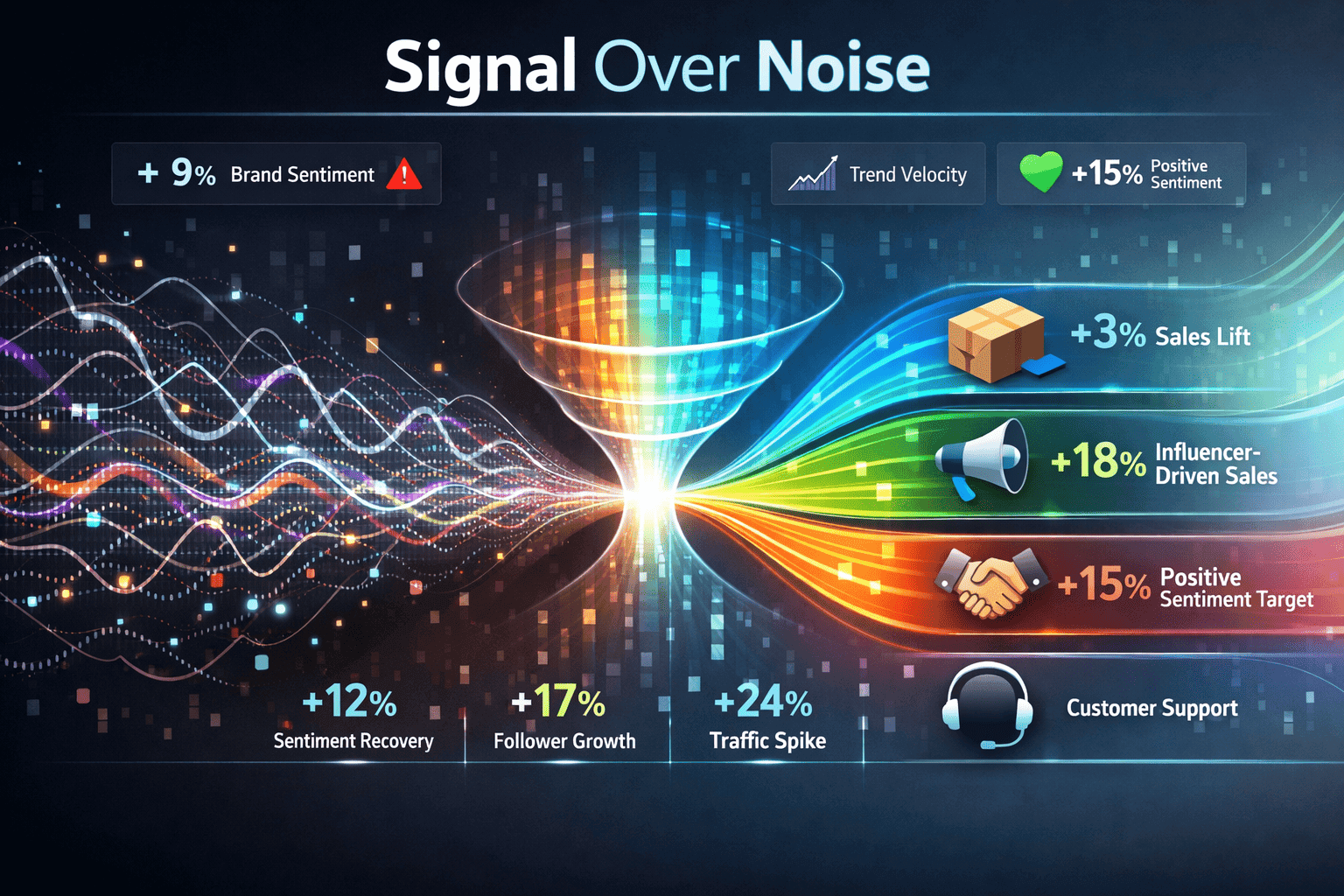
- Sentiment improved by 12% within weeks
- Sales lifted 3% the following quarter
The data that changed everything
Not volume.
Language drift.
Customers didn't complain louder.
They complained differently.
That's the kind of nuance AI-driven listening like what OutX.ai surfaces in real time.
Foodie Haven: When local buzz outpaced national plans
The situation
Foodie Haven launched a new seasonal menu nationwide. Marketing followed the standard rollout: posts, email, paid social.
Everything looked… fine.
The listening insight
In Nashville, something unusual happened.
A single hashtag #FoodieLove started appearing repeatedly within a 48-hour window. Small accounts. Local diners. No influencers.
Just genuine excitement.
Listening tools caught:
- Rapid hashtag velocity
- High positive emotion density
- Geographic clustering
This wasn't planned demand.
It was organic momentum.
The action taken
The team paused approvals and went live immediately.
- A 10-minute Instagram Live
- Chefs answered questions
- Zero production polish
Speed > perfection.
The outcome
- Followers up 17%
- Site traffic up 24% in 48 hours
- Nashville became the top-performing region for the quarter
The data that changed everything
Geographic sentiment concentration.
Not what people were saying but where they were saying it.
FinServe: When early whispers prevented a full-blown crisis
The situation
FinServe operated in a highly regulated environment. Public-facing sentiment usually lagged internal issues.
This time, it didn't.
The listening insight
Negative chatter appeared not on Twitter or LinkedIn but in a niche audit and compliance forum.
Mentions included:
- "Potential data exposure"
- "Unclear incident disclosure"
- "Waiting on confirmation"
Volume was low.
Credibility was high.
AI flagged:
- Risk-weighted sentiment
- Source authority
- Escalation probability
This wasn't noise.
It was a pre-crisis signal.
The action taken
Within hours:
- Legal and compliance teams looped in
- Incident response protocol activated
- Controlled communication drafted
Before mainstream awareness.
The outcome
- Reputation impact contained to under 12 hours
- No mainstream media pickup
- Regulatory response accelerated and compliant
The data that changed everything
Source credibility weighting.
The right voices matter more than loud ones.
OutdoorGear: When creators revealed demand before data did
The situation
OutdoorGear relied on quarterly influencer campaigns. Performance was steady, but plateaued.
The listening insight
Social listening surfaced a pattern:
- Micro-influencers tagging products inside unrelated photo albums
- No sponsorship disclosure
- No affiliate links
Just authentic usage.
This wasn't campaign-driven.
It was behavior-driven advocacy.
The action taken
OutdoorGear flipped its approach:
- Timestamped creator mentions
- Identified repeat organic taggers
- Built a lightweight partnership program around existing fans
No cold outreach.
No mass contracts.
The outcome
- Influencer-driven sales up 18%
- Brand sentiment up 9% across TikTok and X
The data that changed everything
Unprompted tagging frequency.
Demand doesn't always announce itself.
Sometimes it casually shows up in albums.
Pro Tips for Social Listening Success
Most teams don't fail at social listening because of bad tools.
They fail because of bad habits.
Here are five principles that separate signal-driven teams from dashboard watchers.
1. Don't fear negative feedback fear delayed awareness
Negative posts aren't reputation damage.
They're diagnostics.
Every unresolved complaint is a future churn reason.
Every ignored pattern becomes expensive later.
Treat negative sentiment as:
- Early-warning data
- Product validation
- Messaging feedback
Speed matters more than tone.
2. Let AI group meaning, not just keywords
Manual tagging doesn't scale.
Modern listening relies on smart categories:
- AI clusters related conversations
- Themes evolve automatically
- Teams see patterns, not fragments
This is how you detect issues before they trend.
3. Connect listening data to your CRM
Social data alone is context.
CRM data alone is history.
Together, they show intent.
When listening insights sync with tools like HubSpot or Salesforce:
- Sales personalize outreach
- Support predicts churn
- Marketing targets narratives not personas
Disconnected data = delayed decisions.
4. Automate alerts, not reactions
Alerts shouldn't notify you.
They should trigger workflows.
Examples:
- Sentiment drop → open product ticket
- Competitor spike → notify sales enablement
- Topic velocity → content sprint
If humans have to notice, it's already late.
5. Expand beyond text voice matters
Text isn't the whole conversation.
Voice-based data like:
- YouTube comments
- Podcast transcripts
- Video captions
Adds emotional depth traditional monitoring misses.
The future of listening is multi-modal.
Final thoughts
Social listening in 2026 isn't optional.
It's the difference between reacting to the market and anticipating it.
When listening is powered by AI, connected to your stack, and tied directly to decisions, it stops being a marketing task.
It becomes a growth lever.
Move from passive monitoring to intentional action.
Turn conversation into clarity.
And let your brand respond with confidence before the rest of the market catches on.
Happy listening.
FAQs
1. What is social listening in 2026?
Social listening in 2026 uses AI to analyze real-time conversations, detect patterns, and turn market signals into actionable business decisions.
2. How is modern social listening different from social monitoring?
Monitoring tracks mentions. Listening interprets intent, sentiment shifts, and emerging themes, then connects insights directly to action.
3. Which teams benefit from social listening?
Marketing, product, sales, support, and leadership all use social listening as a shared source of customer and market truth.
4. Can social listening predict trends?
Yes. AI-driven tools identify early language shifts, topic velocity, and emotional spikes before trends become mainstream.
5. How does social listening prevent crises?
It detects sentiment and volume changes early, allowing teams to respond before issues escalate publicly.
6. Is social listening worth it for small teams?
Absolutely. Focused queries and AI summaries help small teams act faster without large data or analyst resources.