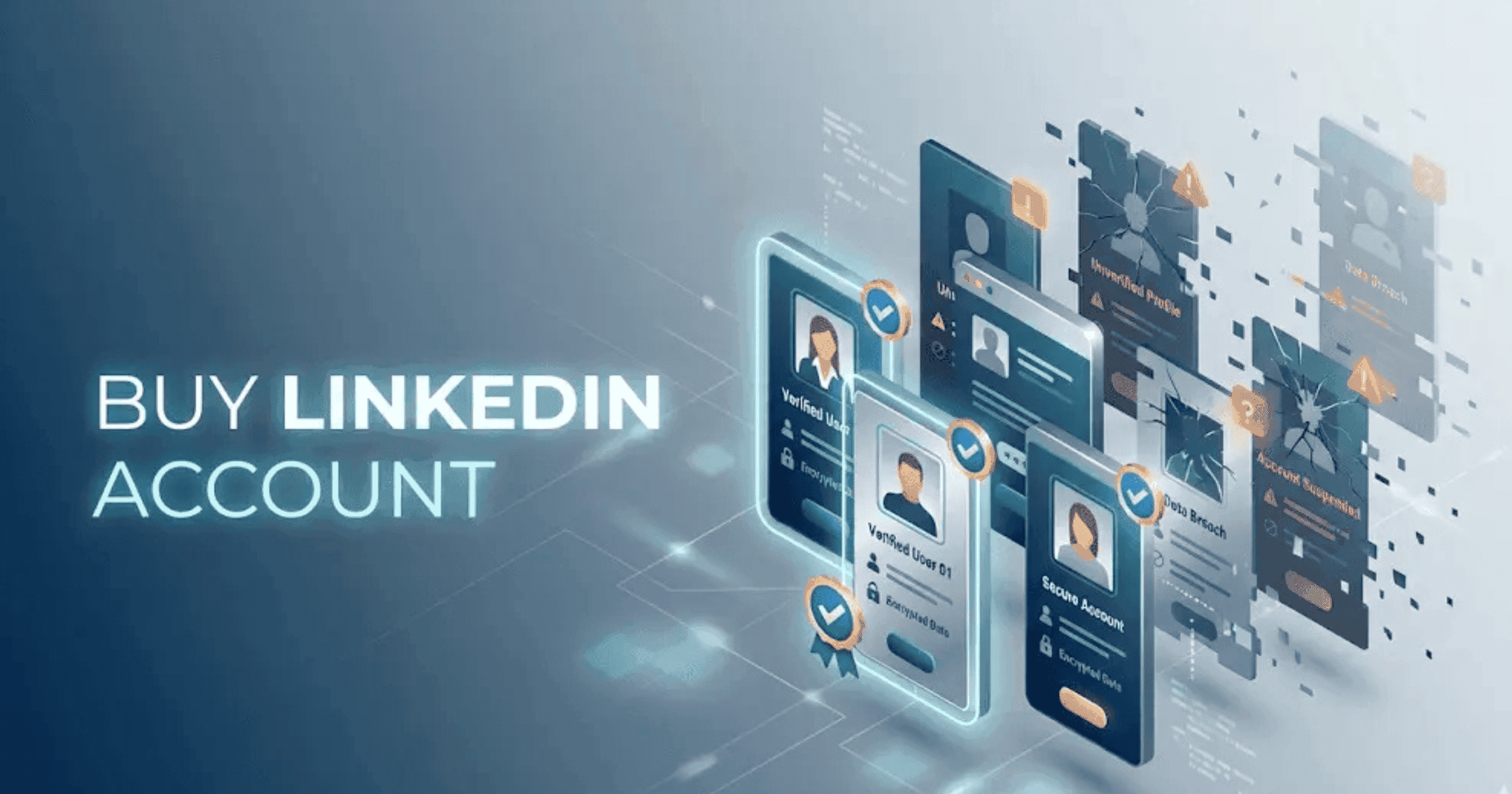
Where to buy LinkedIn account?
Scaling LinkedIn cold outreach hits a wall faster than people admit.
You borrow a few accounts. It works.
You create new ones. Warm them up. Use GoLogin.
Boom banned. Again.
If you’ve ever thought “everyone else is scaling, what am I missing?” you’re not alone. Between stricter detection, invitation limits, and fragile account health, most setups break quietly.
Before jumping into where people actually buy LinkedIn accounts, it’s worth understanding the constraints: LinkedIn’s invitation limits, visibility mechanics, and safer ways teams reduce risk at scale.
If you’re new to this side of LinkedIn, start here:
Top Places Where You Can Buy LinkedIn Accounts in 2025
If you search for “buy LinkedIn accounts,” you won’t find one clear winner. Instead, you’ll find a messy ecosystem of marketplaces, resellers, grey-area vendors, and middlemen all promising “aged,” “safe,” or “ready-to-use” accounts.
Some people manage to make these work (for a while). Many don’t.
Below are the most commonly mentioned account marketplaces in 2025, what they actually offer, and where teams usually run into problems.
This isn’t a recommendation list it’s a reality check based on how these platforms operate.
Z2U

Z2U isn’t a LinkedIn account provider as much as it is a massive digital goods bazaar. LinkedIn accounts just happen to be one of many things sold there, alongside gaming accounts, software keys, and social profiles.
That scale is both its appeal and its problem.
What buyers usually notice first:
- Huge number of sellers
- Wide price range
- Multiple account “types” labeled as aged, verified, or bulk
On paper, it feels competitive and transparent. In reality, quality varies seller to seller. Two accounts described the same way can behave completely differently after login.
Most Z2U sellers operate on volume. Accounts are often created in batches, resold quickly, and supported only for a short replacement window. Once that window closes, responsibility usually shifts to the buyer.
Common buyer experiences include:
- Accounts surviving initial login but failing later
- Inconsistent recovery access
- Sellers rotating storefronts frequently
Z2U works best for people who already expect churn and are comfortable testing multiple sellers. It’s rarely used by teams looking for long-term profile stability.
Think of it less as a solution and more as an open market where you’re trading convenience for predictability.
MirrorProfiles

MirrorProfiles positions itself as more intentional than open marketplaces. Instead of hundreds of sellers, it presents a narrower catalog with clearer segmentation.
You’ll usually see accounts described by:
- Age range
- Region
- Verification status
- Intended use case
The buying experience feels calmer and more curated, which is why agencies often try it after getting burned on bulk marketplaces.
That said, MirrorProfiles doesn’t fundamentally change how LinkedIn evaluates accounts.
Profiles may look cleaner at the surface level photos, bios, basic activity but once they’re introduced into real workflows, the same behavioral checks apply.
What buyers tend to like:
- Clearer communication
- Fewer bait-and-switch listings
- Slightly longer initial survival windows
What still causes issues:
- Accounts behaving similarly to each other
- Limited tolerance for rapid activity changes
- Dependence on how cautiously the account is used
MirrorProfiles often works best in small quantities. Teams treating these accounts as long-term identities usually proceed slowly. Teams expecting instant scale tend to be disappointed.
It’s a middle-ground option less chaotic than open markets, but not meaningfully safer once usage begins.
LinkUnity

LinkUnity markets itself around growth rather than raw account sales. Accounts are often framed as “outreach-ready” or compatible with scaling tools, which appeals to teams already running structured campaigns.
This positioning sets expectations high.
What’s typically offered:
- Pre-configured LinkedIn accounts
- Claims of warm-up or prior activity
- Compatibility language around automation
In practice, outcomes vary widely.
Some buyers report accounts holding up under light usage. Others see restrictions shortly after increasing activity. The difference rarely comes down to the seller it’s how quickly the account’s behavior changes after handoff.
LinkUnity accounts tend to struggle when:
- Treated as disposable senders
- Pushed into volume immediately
- Used interchangeably with other accounts
They perform better when:
- Activity remains gradual
- Engagement patterns change slowly
- Expectations are conservative
LinkUnity attracts teams who already understand LinkedIn outreach mechanics. For beginners, the “ready” label can be misleading.
It’s less a shortcut and more a head start one that still requires restraint.
UseViral

UseViral comes from the social engagement world first. Followers, likes, views that’s the DNA of the platform. LinkedIn accounts exist there, but they’re not the core product. They’re an extension.
And that context matters.
Most accounts sold through UseViral are optimized for speed and simplicity, not depth. The buying experience is straightforward. You select a package, check out, and get access quickly. No long conversations. No heavy qualification.
Typical characteristics you’ll see:
- Fast delivery timelines
- Simple onboarding
- Limited customization options
The accounts themselves tend to be lightweight. Minimal history. Minimal engagement trails. Enough to pass surface-level checks, but not much more. They often look “fine” at first glance complete profiles, basic details but they don’t carry much behavioral buffer once activity ramps up.
Buyers usually use these accounts for:
- Short-term outreach tests
- Temporary capacity boosts
- Non-critical or experimental campaigns
They’re rarely used to build long-term LinkedIn identities.
Common complaints tend to cluster around the same themes:
- Short account lifespan
- Low tolerance for changes in behavior
- Profiles that feel generic or interchangeable
None of this is hidden. UseViral doesn’t position these accounts as premium or long-lasting. The mismatch happens when buyers expect resilience from a product designed for convenience.
If you treat UseViral accounts as quick-access assets, expectations stay aligned. If you expect them to behave like aged, organically grown profiles, frustration usually follows.
Akountify

Akountify positions itself differently from bulk marketplaces. The language is more deliberate. Listings emphasize profile completeness, aging, and surface-level quality signals that matter when you first log in.
That framing attracts buyers who’ve already been burned by cheap bulk accounts.
What typically stands out:
- Higher per-account pricing
- Smaller batch availability
- More detailed account descriptions
At first glance, Akountify accounts often feel more “real.” Profiles look filled out. Photos don’t feel autogenerated. There’s an attempt to signal normalcy.
Early results can reflect that. Some teams report accounts surviving initial logins and light activity without immediate issues. Others experience enforcement later, once the account is pushed into real workflows.
Patterns tend to be consistent.
Akountify accounts usually handle:
- Passive browsing
- Light engagement
- Gradual increases in activity
They struggle with:
- Immediate scaling
- Repetitive outreach patterns
- Shared infrastructure across multiple accounts
The accounts themselves aren’t fundamentally different from others on the market they’re just presented with more care. Once usage begins, LinkedIn’s evaluation doesn’t change.
Akountify tends to appeal to buyers who already understand that no purchased account is immune. The expectation isn’t safety it’s friction delay.
For teams willing to move slowly, that delay can feel valuable. For teams expecting durability under pressure, the experience is often underwhelming.
BulkAccountsBuy

BulkAccountsBuy is exactly what the name suggests. It exists to deliver volume.
If you need a large number of LinkedIn accounts quickly, few platforms make it easier. Pricing scales down aggressively, listings are built for bulk orders, and customization is minimal by design.
That convenience is the entire value proposition.
But it comes with trade-offs that are hard to ignore.
Bulk-created accounts often share:
- Creation timelines
- Structural similarities
- Behavioral fingerprints
Individually, many of these accounts will log in just fine. Collectively, patterns start to emerge. And LinkedIn doesn’t need to catch every account when patterns are obvious at scale.
Teams using BulkAccountsBuy usually plan for attrition from day one. Accounts are treated as interchangeable units, not identities tied to long-term workflows.
This model tends to show up in:
- High-volume outreach setups
- Short-lived campaigns
- Aggressive scaling experiments
What it doesn’t support well:
- Profile longevity
- Brand consistency
- Gradual relationship building
BulkAccountsBuy works when loss is baked into the math. When teams expect stability, costs escalate quickly not in money alone, but in time spent replacing accounts.
It’s a volume-first approach, and it behaves like one.
True Accs / BuyAccs

True Accs and BuyAccs operate closer to direct sellers than open marketplaces. Inventory is smaller, pricing is higher, and communication is usually one-to-one rather than transactional.
That alone changes buyer expectations.
People come here looking for:
- Better accountability
- Cleaner account setups
- Fewer unknown variables
Sometimes, that expectation is met. The buying process feels more personal. Listings are limited. Sellers often answer questions directly.
But once the account is active, the underlying reality doesn’t change.
LinkedIn evaluates behavior, not where the account came from.
Accounts from True Accs or BuyAccs can still face restrictions if usage patterns shift too fast or infrastructure overlaps. The difference is mostly in the surface experience, not the enforcement logic.
These platforms tend to appeal to:
- Smaller teams
- Buyers who prefer fewer moving parts
- People willing to pay more for perceived control
They’re less chaotic than bulk marketplaces, but they don’t offer guarantees beyond short replacement windows.
For some buyers, that trade-off feels worth it. For others, the higher price doesn’t translate into meaningfully different outcomes.
SocLikes / VIPLikes

SocLikes and VIPLikes come from engagement services, not account management. Likes, followers, and visibility are their primary business. LinkedIn accounts are secondary.
That shows in how these accounts behave.
Typical expectations:
- Fast delivery
- Low pricing
- Minimal setup friction
Typical realities:
- Generic profiles
- Limited history
- High turnover
These accounts are often used for:
- Disposable outreach
- Temporary coverage gaps
- Testing messaging or tooling
They’re rarely trusted for anything that requires continuity.
The profiles usually lack depth. There’s little organic behavior to fall back on once activity changes. As a result, tolerance is low when patterns shift.
SocLikes and VIPLikes don’t pretend to offer durability. The accounts are sold as quick-access assets, and most buyers who use them successfully treat them exactly that way.
Problems arise when expectations drift when buyers expect longevity from a product designed for speed.
In that sense, these platforms are honest about what they are. They optimize for accessibility, not sustainability.
Types of Accounts You Can Buy
When people say they “bought a LinkedIn account,” they’re usually not talking about a single thing. They’re buying a shortcut packaged in different ways.
Aged accounts
Aged accounts are profiles that have existed for months or years. They come with basic history: logins, profile views, maybe light activity. The appeal is simple they don’t look new, and that alone changes how LinkedIn treats them.
Verified accounts
Verified accounts add another layer. These are tied to phone numbers or emails, which helps them pass early trust checks. Verification doesn’t make an account safe, but it can delay friction.
Bulk accounts
Bulk accounts are about volume. Created or sourced in batches, they’re cheaper and interchangeable. These aren’t identities they’re capacity.
Accounts with connections come pre-loaded with a network. Sometimes it’s real, sometimes it’s thin. Either way, they’re meant to look “lived in,” not empty.
None of these change LinkedIn’s rules. They just change how fast you hit them.
Why People Consider Buying LinkedIn Accounts
Speeding Up Outreach & Growth
New LinkedIn profiles are fragile. Limits are tighter, visibility is lower, and patience is required. Buying an account skips that waiting period and lets teams start testing outreach sooner.
Pre-Established Credibility
Profiles with age, verification, or existing connections feel more legitimate. Messages land differently when the sender doesn’t look brand new even if the content is identical.
Scaling for Agencies & Teams
Agencies and outbound teams don’t scale linearly. One profile can only do so much. Multiple accounts spread activity, reduce bottlenecks, and allow parallel workflows without overloading a single identity.
That’s the pull. Not growth hacks operational reality.
Conclusion
Buying LinkedIn accounts isn’t a growth hack. It’s usually a response to friction.
People end up here after doing everything “right” warming profiles, respecting limits, spreading activity and still watching accounts fall over. Marketplaces exist because the demand exists, not because they solved the problem.
What this landscape really shows is that there’s no perfect source, no permanently safe account, and no vendor that can bypass how LinkedIn evaluates behavior. Some platforms delay friction. Some trade stability for speed. All of them operate within the same constraints.
If you’re exploring where to buy LinkedIn accounts, the real question isn’t which marketplace is best it’s what trade-offs you’re willing to accept: longevity vs. volume, control vs. convenience, patience vs. speed.
Once that’s clear, the rest of the decisions get a lot more honest.
FAQs: Buying LinkedIn Accounts
Is buying LinkedIn accounts allowed?
No. Buying or selling LinkedIn accounts violates LinkedIn’s User Agreement. That’s the baseline reality. Everything discussed in this space exists in a gray (often dark gray) zone, which is why enforcement can feel unpredictable.
Why do some bought accounts last while others get banned quickly?
Because LinkedIn doesn’t evaluate accounts in isolation. It looks at behavior, patterns, and changes over time. Two identical-looking accounts can have very different outcomes depending on how they’re used after login.
Are aged accounts safer than new ones?
They’re usually less fragile, not safe. Age helps with initial trust signals, but it doesn’t protect an account from sudden behavior shifts or aggressive usage.
Do verified accounts reduce ban risk?
Verification (phone or email) helps pass early checks, but it’s not a shield. It can delay restrictions, not prevent them.
Are accounts with connections better for outreach?
They look more “lived in,” which can help messages land better. The quality of those connections matters less than how the account behaves afterward.
Why do bulk accounts fail more often?
Bulk accounts tend to share creation timelines, structures, or behavior patterns. At scale, those similarities become easy to detect.
Can using tools like GoLogin or proxies guarantee safety?
No. They help isolate sessions, but they don’t override LinkedIn’s behavioral analysis. Infrastructure matters, but behavior matters more.
Is renting accounts safer than buying?
Not necessarily. Rented accounts often come with shared history or usage patterns you can’t see or control.
Do agencies use bought accounts successfully?
Some do, usually with conservative usage and an acceptance of churn. Others cycle through accounts constantly. There’s no universal playbook.
What’s the biggest mistake people make?
Expecting permanence. Bought accounts aren’t long-term identities. They’re temporary assets operating under constraints.