LinkedIn ADs VS Facebook ADs
If you're marketing to B2B buyers, the "LinkedIn Ads vs. Facebook Ads" debate pops up every quarter.
Budget season. New product launch. Pipeline’s light.
Same question: Which platform will reach decision-makers and actually convert to revenue?
Short answer: Both work. Longer answer: they work differently, at different stages, with different economics and your plan should reflect that intentionally.
Let’s unpack it all, with clear comparisons, use cases, and practical plays you can steal today.
LinkedIn Ads vs. Facebook Ads: How do they compare?
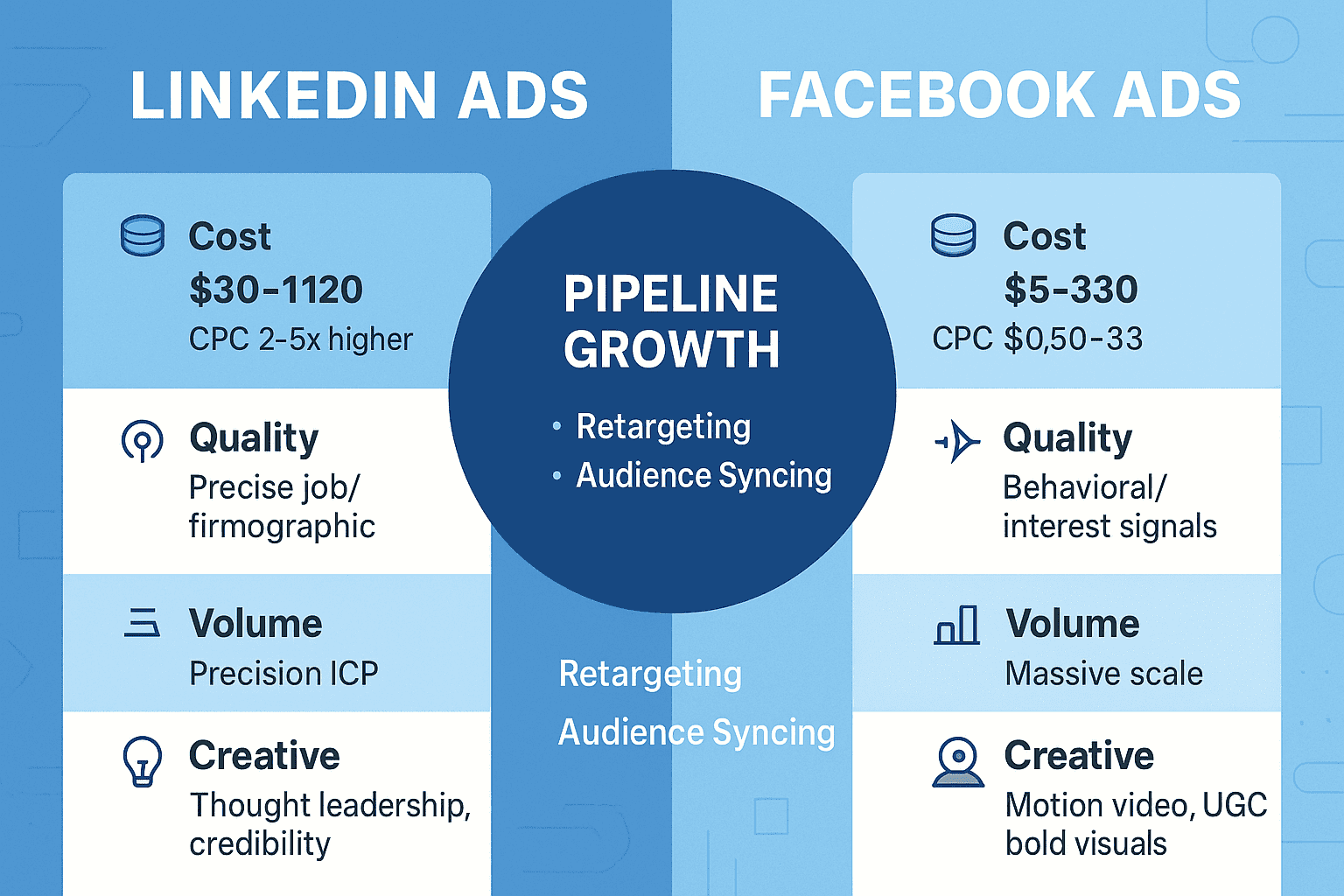
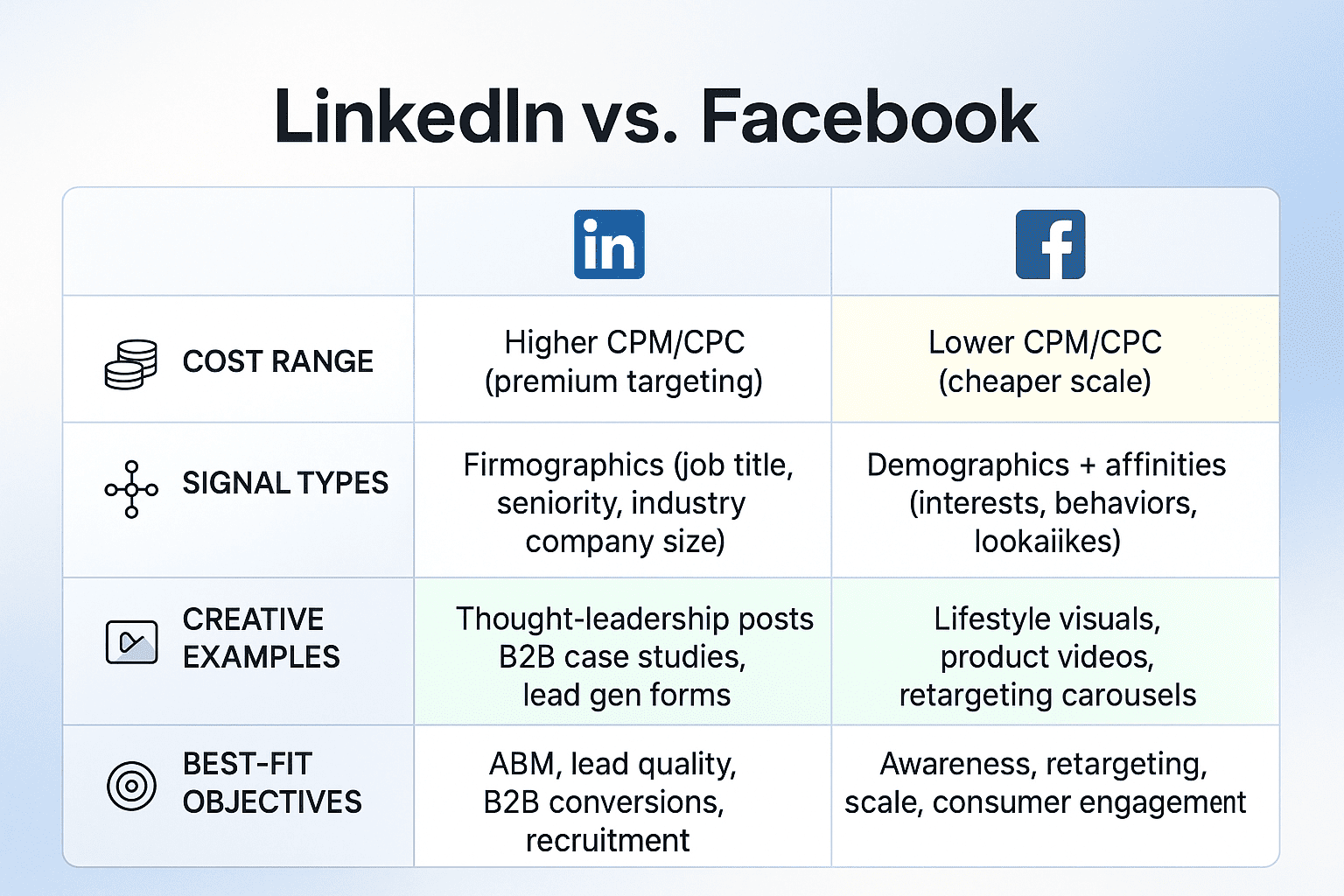
Let’s make it tactical. Side-by-side:
Cost dynamics
- LinkedIn: higher CPCs ($5–$15+ common), higher CPMs ($30–$90), and higher CPAs yet often higher win rates per lead due to accurate persona reach.
- Facebook: lower CPCs ($0.50–$3 typical), lower CPMs ($5–$20), but more noise. You’ll need filtering, scoring, and retargeting to surface buyers.
Signal quality:
- LinkedIn: strong first-party professional data; reliable job/firmographic targeting.
- Facebook: strong behavioral/interest signals; post-iOS tracking mitigated via Conversions API and robust event setup.
Creative fit:
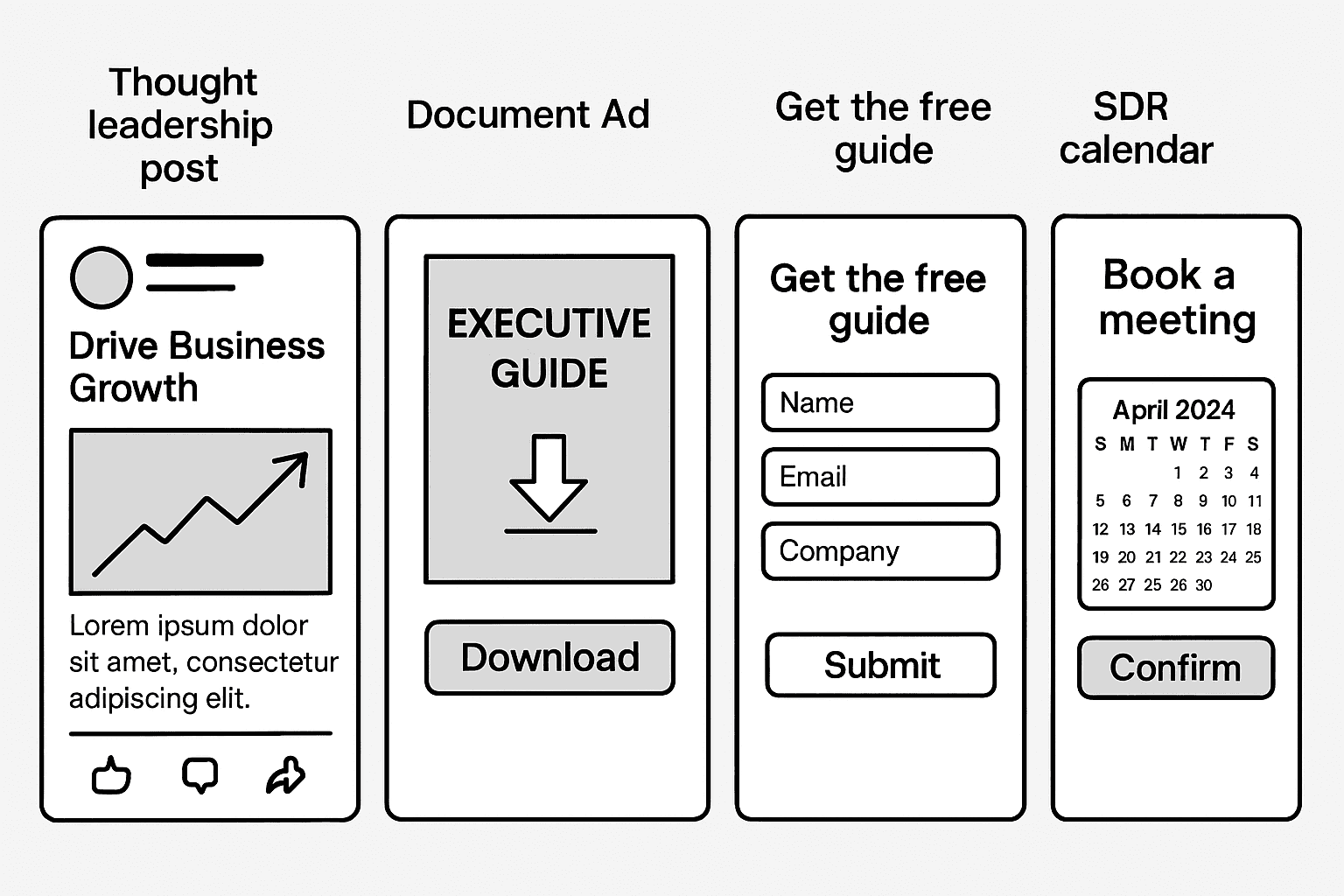
- LinkedIn: thought leadership, case studies, product-in-context, and lead gen forms for friction-managed demos.
- Facebook: motion-first video, UGC-style testimonials, carousels, and short explainers to seed mental availability.
Buying committee reach:
- LinkedIn: direct job/seniority reach and account mapping.
- Facebook: lookalikes from your best accounts, layered with retargeting.
Audience Size & Demographics
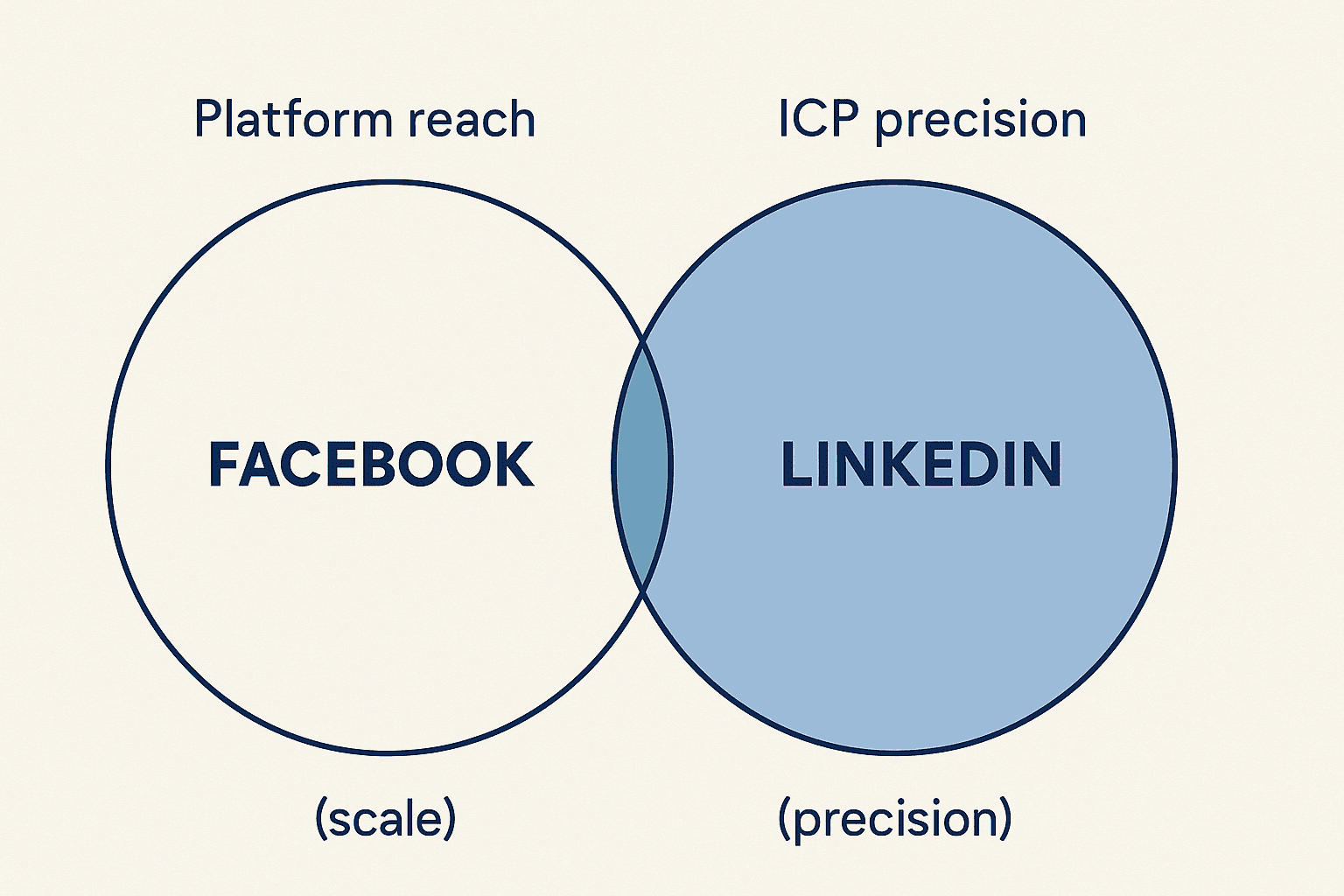
Scale versus specificity starts with audience composition.
- Facebook: Over 3B monthly active users globally. Insane reach. B2B buyers are here as people, not job titles. Use broader signals, content consumption, and your first-party data to surface them.
- LinkedIn: 1B+ members, concentrated in professional contexts. Penetration is strongest in North America and Europe, with growing APAC presence. Seniority skews higher in core markets.
For niche ICPs (say, “Security leaders at fintech scaleups”), LinkedIn can hit high-precision segments with fewer wasted impressions.
For broader B2B categories (e.g., “SMB owners needing accounting tools”), Facebook’s reach and cheap top-of-funnel touchpoints are invaluable.
Reality check
Both platforms rely on your ICP clarity and data hygiene. Fuzzy ICP? Fuzzy outcomes. OutX.ai helps define and operationalize ICPs across networks, keeping your segments aligned and synced.
LinkedIn’s Undeniable B2B Audience
This is LinkedIn’s home turf. Professional identity and intent.
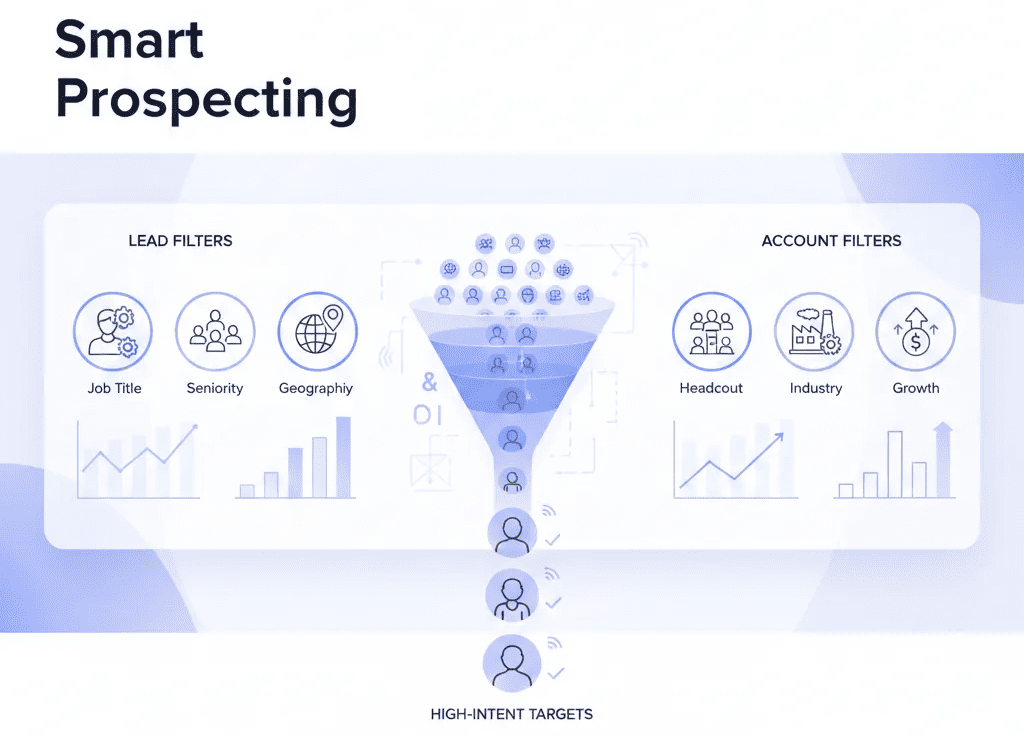
- Firmographic targeting is native. Company size, industry, and seniority are filters, not guesses.
- Role-specific content resonates. Talk budget, metrics, and team impact. You’re on the clock, in a work mindset.
- Direct-response formats (Lead Gen Forms, Document Ads, Website Conversion campaigns) map well to business goals like demos and trials.
Expect to see stronger conversion-to-meeting rates if your landing experience is aligned (fast, value-forward, SDR follow-up within minutes). Also, Sponsored Content and Conversation Ads can accelerate ABM motions when layered with account lists.
Use this channel to validate offers quickly. If your message lands with the right titles, you’ll know. If it doesn’t, your ICP or value prop needs a rethink. OutX.ai can help automate rapid creative and offer testing, then roll winners out to matched audiences.
Targeting the Right Audience
B2B targeting is not one lever. It’s a map. Here’s the modern stack you need across both platforms:
- Firmographics: company size, industry, location, revenue band.
- Role signals: job title, function, seniority, skills (stronger on LinkedIn).
- Behavioral: site visitors, content engagers, video viewers, time on site (stronger on Facebook/Instagram).
- Account-based: named accounts, CRM lists, open opportunities, customer upgrades/expansion.
- Exclusions: current customers, employees, competitors, low-fit SMB if you sell upmarket.
- Stage-based: cold awareness, product education, retargeting (high intent), and cross-sell/upsell.
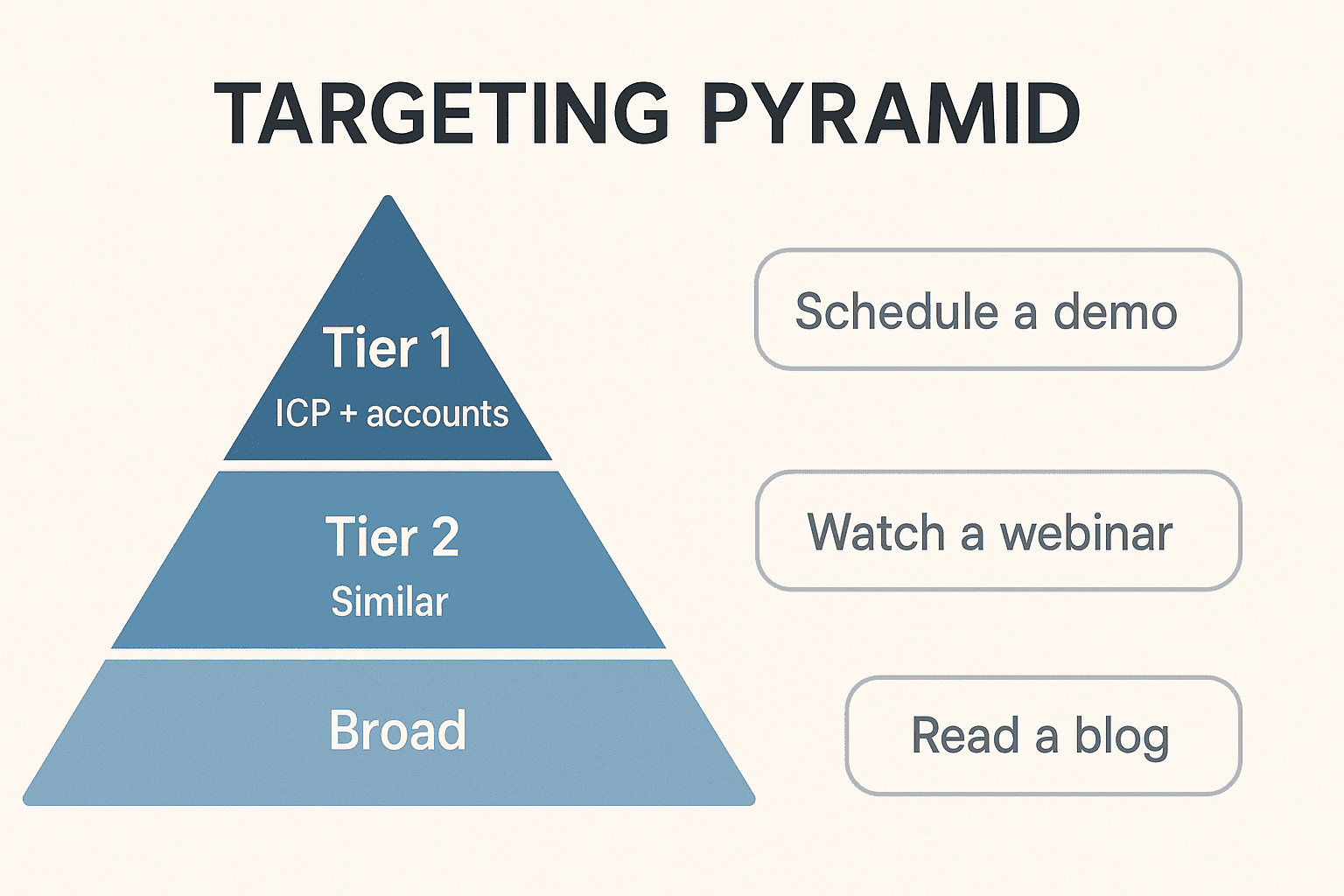
Use a three-tier segmentation:
- Tier 1 (core ICP + target accounts): LinkedIn job/seniority plus company lists. Highest bids. High-friction CTAs OK (demo, consultation).
- Tier 2 (adjacent personas/industries): LinkedIn skills/interest overlays; Facebook lookalikes from Tier 1 converters. Mid-friction CTAs (webinar, calculator).
- Tier 3 (broad awareness): Facebook interest/contextual signals. Low-friction CTAs (content, video, newsletter).
OutX.ai can maintain these tiers automatically by syncing CRM updates, refreshing suppression lists, and rotating creative by stage. It’s ad ops without the whiplash. Fewer manual uploads, fewer targeting mistakes.
LinkedIn Audience Targeting
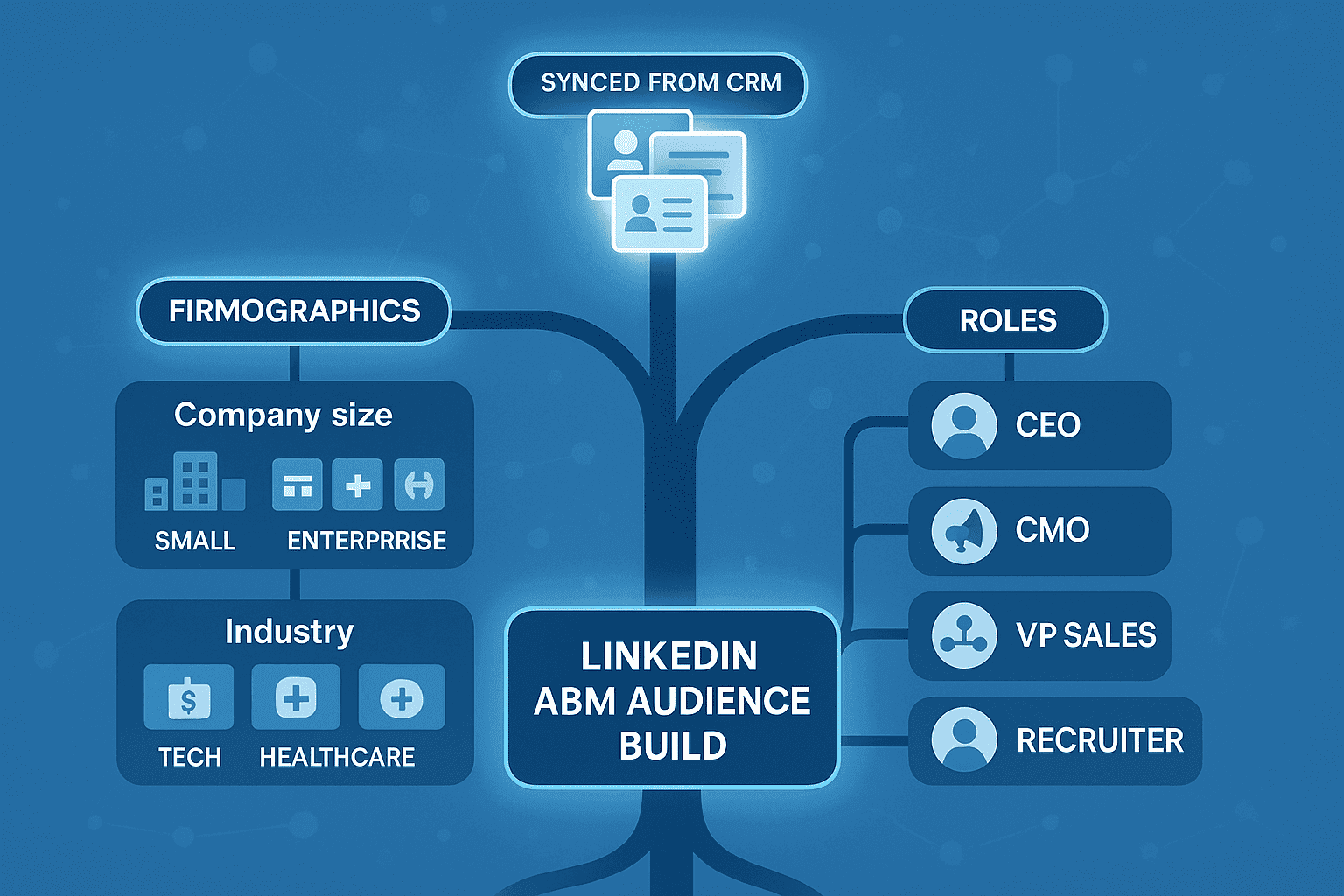
LinkedIn’s targeting is a B2B marketer’s buffet. The trick is not to eat everything. Go precise, then widen methodically.
Start here:
- Company attributes: name, industry, size, growth traits.
- Role filters: job title, function, seniority, skills.
- Geography: country > region > metro to control CPMs and SDR coverage.
- Group memberships and interests: use sparingly for relevance spikes.
ABM tactics:
- Create account lists by tier. Pair with job seniority to ensure decision-makers see you.
- Use Matched Audiences to upload CRM contacts, closed-won customers, and open opps for suppression or upsell.
- Layer skills for emerging roles/titles where naming is messy (e.g., “RevOps,” “Machine Learning”).
Formats that sing:
- Message Ads and Conversation Ads for mid-funnel engagement. Use judiciously.
- Document Ads for ungated showcases. Great for case studies or frameworks.
- Lead Gen Forms with strict field logic. Consider work-email-only and company size rules.
Pro move: run a “job changes” audience for your user champions who move companies. They’re predisposed. OutX.ai can detect and trigger creative tailored to alumni champions, plus coordinate with SDRs. That’s pipeline alchemy.
Facebook Ads Targeting
Facebook’s superpower is scale plus behavior. You won’t get perfect titles but you’ll get cheap learning cycles and the ability to earn attention with creative instead of filters. That’s leverage.
Foundational setup:
- Conversion API with deduplicated pixel events to recover signal post-iOS.
- Standard events: ViewContent, Lead, CompleteRegistration, StartTrial, Schedule, Purchase (use what matches your funnel).
- UTMs everywhere. Connect to CRM and analytics.
Audience plays:
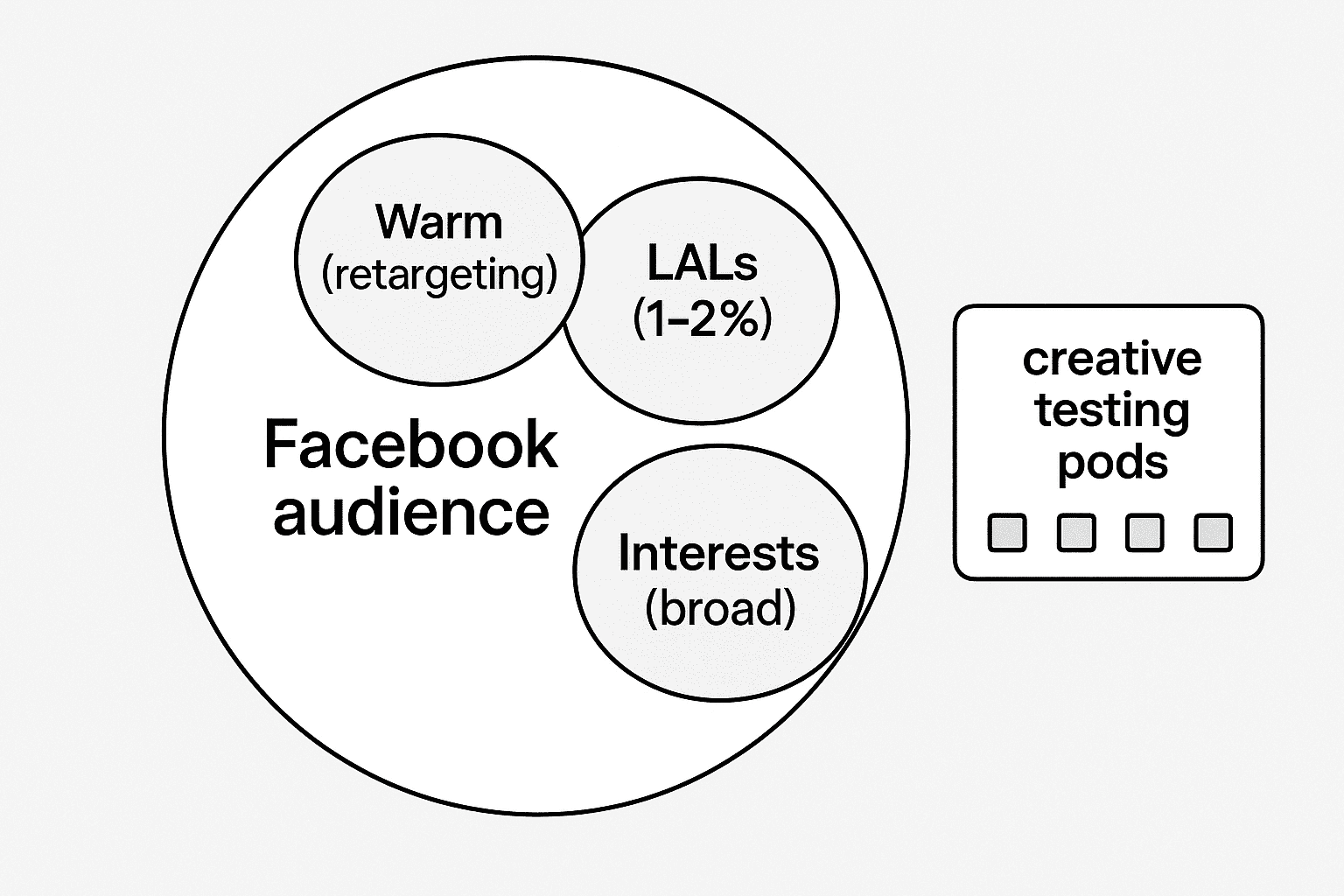
- Warm: website visitors last 30/60/90 days; video viewers (50–95%); engaged Instagram profile users; LinkedIn engagers imported via site retargeting.
- Lookalikes: seed from high-quality sources (closed-won accounts, SQLs, product-qualified users). Avoid low-quality seeds like raw leads.
- Interests and behaviors: industry conferences, software categories, job function proxies. Layer cautiously; test broad.
Creative angles that work:
- UGC-style testimonials speaking to business outcomes (“cut onboarding time by 43%”).
- Short motion explainers and carousels illustrating before/after workflows.
- Category design content: point-of-view, myths, and playbooks. Educate first.
Seeing Optimal ROI
ROI isn’t a channel number. It’s a system result. You optimize by aligning offers, audiences, creative, and measurement to the stage your buyer is actually in. Then you manage to revenue not just form fills.
Tactics that consistently lift ROI:
Offers by funnel stage:
- Cold: insights, benchmarks, toolkits, short videos. Earn the second look.
- Warm: product walkthroughs, ROI calculators, case studies. Nudge action.
- Hot: demo, free trial, consultation. Clear value, clear next step.
Conversion plumbing:
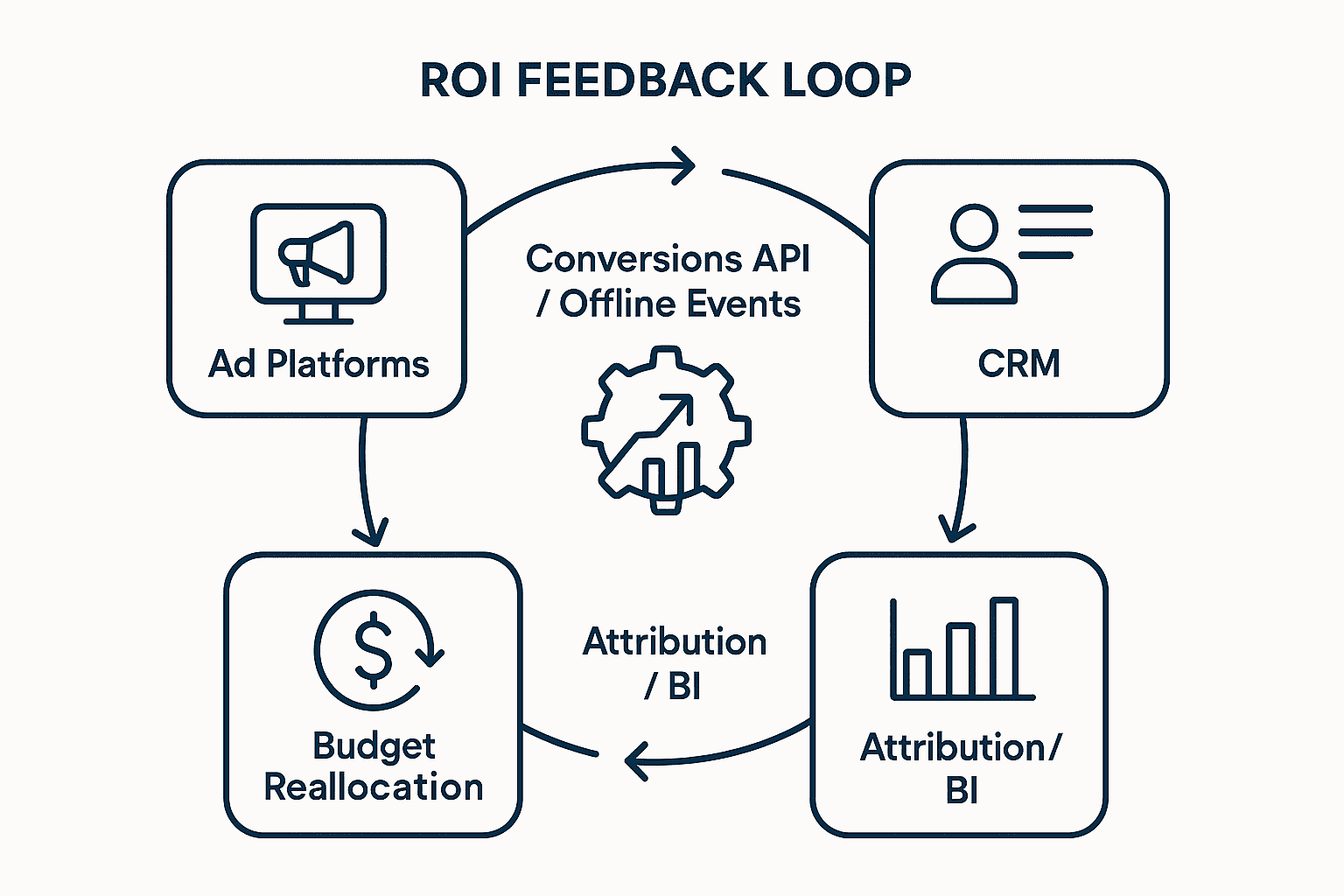
- Pass offline conversions (opportunities, revenue) back to both platforms.
- Use Lead Gen Forms on LinkedIn with validation and SDR SLAs <10 minutes.
- Test landing page vs. native forms. Keep what produces SQLs, not just leads.
Budget discipline:
- Minimum 20–30 conversions per week per optimization point. If you can’t hit that on LinkedIn, optimize for higher-funnel events, then graduate.
- Shift dollars weekly based on cost per SQL/opportunity, not CPL.
Measurement that isn’t lying to you:
- Multi-touch attribution in your analytics/CRM.
- Geo or time-based holdouts for incrementality checks.
- Cohort and payback analysis (30/60/90 days). B2B has latency respect it.
How each ad network supports your B2B marketing
Both platforms can drive B2B outcomes. They just do it differently.
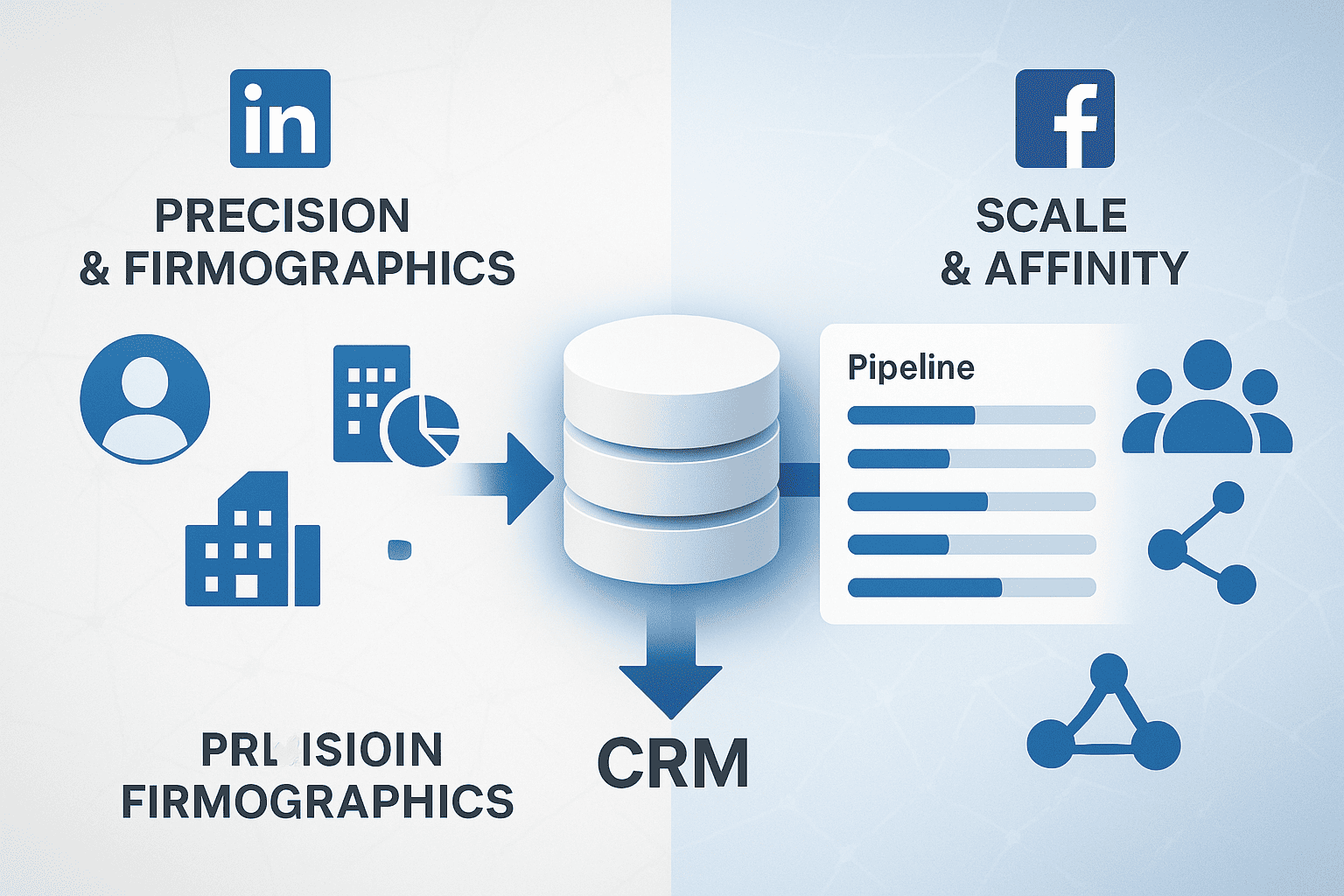
LinkedIn is built on professional identity. You can reach people by job title, function, seniority, company size, and industry.
- This makes it ideal for ABM, high-value lead gen, event promo, and pipeline acceleration.
- Facebook (Meta) is built on scale. Algorithms, interests, and behavioral signals.
- It’s fantastic for low-cost reach, video education, retargeting warm audiences, and feeding your funnel with a steady stream of engaged prospects.
Use both strategically. LinkedIn for precision and intent. Facebook for scale and repetition.
OutX.ai fits as the connective tissue. Unify ICP definitions, sync audiences, automate creative testing, and optimize budgets to pipeline across both networks. Less guesswork. More signal. Real growth.
LinkedIn Ads: Pros and Cons
Pros:
- Precision B2B reach. Target by job title, function, seniority, skills, and company attributes with confidence.
- Strong ABM orchestration. Named accounts, buyer groups, and role coverage in one place.
- Contextual fit. Professional mindset boosts engagement for thought leadership and product education.
- Lead Gen Forms that convert. Higher completion rates, better quality with work email + firmographic validation.
- Quality downstream. Higher SDR acceptance and opportunity creation rates in many B2B motions.
Cons:
- Costs bite. Expect higher CPC/CPM and CPL. You pay for precision.
- Volume ceiling. Smaller total audience means scaling requires broader filters or expanding geos/segments.
- Learning periods. Hitting 20–50 conversions/week per ad set can be tough for narrow ICPs.
- Creative fatigue. Smaller audiences see repeats faster; you need a steady creative cadence.
- Overreliance risk. If you only use LinkedIn, you may miss cheap attention and creative learning from broader social.
Best fits:
- Enterprise/mid-market ABM.
- High ACV products and complex buying committees.
- Demo-led and consultative sales motions.
Pair with Facebook for cost-efficient awareness and retargeting. OutX.ai can synchronize this mix, ensuring your LinkedIn budget hunts high-quality personas while Facebook warms them up at scale.
Facebook Ads: Pros and Cons
Pros:
- Massive reach and low CPMs. Ideal for testing narratives and scaling attention quickly.
- Creative playground. Video, UGC, carousels formats that humanize B2B.
- Powerful algorithms. With clean conversion signals, Facebook’s delivery gets scary good.
- Retargeting powerhouse. Website visitors, video viewers, and engagement audiences convert affordably.
- Speed to learning. Rapid creative sprints produce insights that translate across channels.
Cons:
- Title/role precision is weaker. You’ll need proxies and lookalikes.
- Post-iOS attribution fog. Requires robust server-side tracking and careful event setup.
- Lead quality variance. Cheaper doesn’t mean better. Score, filter, and route intelligently.
- Brand-safety and policy quirks. Keep creative compliant and avoid bait-y tactics.
- Audience overlap/waste. Without suppression and CRM syncing, you’ll double-serve or chase customers.
Best fits:
- Category education and content distribution.
- Mid-funnel reacquisition and retargeting.
- SMB and geography-led growth where CAC is tight.
Make it sing with disciplined data flow. OutX.ai can maintain clean audiences, feed offline conversion signals, and auto-spin up creative variants per persona and stage. Less manual grind, more compounding performance.
The Takeaway
This isn’t LinkedIn Ads vs. Facebook Ads. It’s LinkedIn Ads and Facebook Ads on purpose. Use LinkedIn to hit the right people with the right offer when they’re wearing their work hat.
Use Facebook to earn attention cheaply, test messages fast, and retarget efficiently.
Anchor your measurement in pipeline and revenue, not just leads. Send offline conversions back to both platforms.
Segment by stage. Rotate creative weekly. Keep audiences clean and let orchestration do the heavy lifting tools like OutX.ai can automate the workflows, targeting syncs, and budget moves that separate “spend” from “scale.”
One stack. Two networks. Many buyers. Coordinate, or be ignored.
FAQs: LinkedIn Ads vs Facebook Ads (B2B)
Are LinkedIn Ads better than Facebook Ads for B2B?
No. LinkedIn Ads are better for precision and decision-maker targeting. Meta Platforms Ads are better for reach, testing messages, and lower costs. The best results usually come from using both.
Why are LinkedIn Ads more expensive?
LinkedIn charges more because targeting is based on verified job titles, seniority, and company data. You pay for accuracy and intent, not volume.
Which platform delivers higher-quality B2B leads?
LinkedIn usually produces higher-quality leads and better meeting rates. Facebook generates more leads at lower cost but requires filtering and retargeting to maintain quality.
Do Facebook Ads actually work for B2B?
Yes. Facebook works best for awareness, education, video, and retargeting. It’s less effective for cold demo asks but strong for warming buyers over time.
Which platform should B2B startups use first?
Most startups start with Facebook to test messaging cheaply, then add LinkedIn once ICPs, budgets, and sales processes are clearer.
Is LinkedIn or Facebook better for ABM?
LinkedIn is better for ABM due to company and role targeting. Facebook supports ABM mainly through retargeting and lookalike audiences.
How should LinkedIn and Facebook Ads work together?
Use Facebook for low-cost awareness and retargeting. Use LinkedIn for high-intent demos, trials, and account-based plays.
How should ROI be measured?
Measure ROI on SQLs, opportunities, and revenue, not just CPL. Facebook often wins on cost efficiency; LinkedIn wins on deal quality.
.png&w=3840&q=75)