RecurPost Alternatives in 2026: 6 Tools Compared (Free vs Paid)
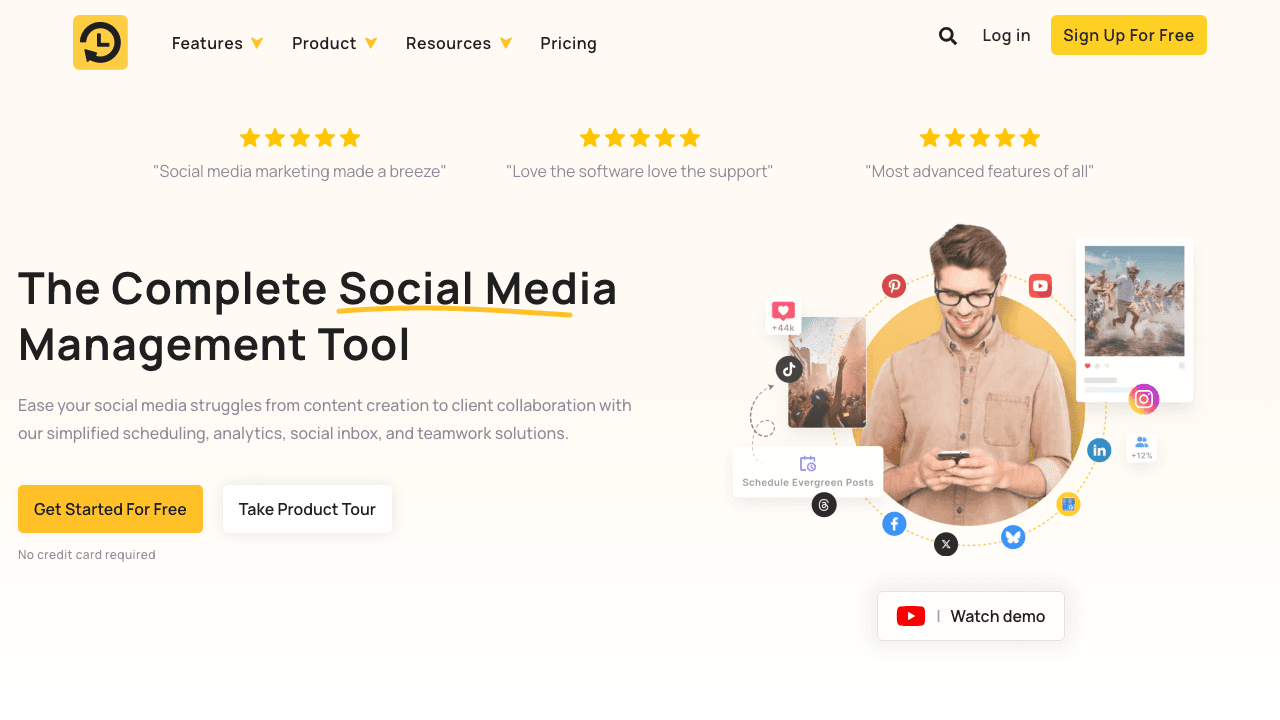
RecurPost is built for one thing: keeping your social profiles active by automatically recycling evergreen content. At $9-79/mo, it is among the cheapest paid schedulers in the market. If you have outgrown the recycling model, need more analytics, or want features that require the Agency plan, here are the six alternatives worth evaluating in 2026, and where OutX fits in if your LinkedIn strategy needs more than just scheduled content.
Quick comparison
Six alternatives, prices in USD, sorted by fit for teams evaluating RecurPost.
| Tool | Pricing | Best for | Free tier |
|---|---|---|---|
| RecurPost | From $9/mo | Small businesses recycling evergreen content automatically | No (14-day trial) |
| OutX (recommended) | Free; from $99/mo | LinkedIn-first signals, not just content recycling | Yes |
| Buffer | Free; from $6/channel/mo | Teams wanting reliable scheduling with a stronger free tier | Yes |
| MeetEdgar | From $29.99/mo | Teams wanting the original content recycling platform | No (7-day trial) |
| SocialBee | From $29/mo | Teams wanting content categories + recycling + AI generation | No (14-day trial) |
| Later | From $25/mo | Visual-first brands focused on Instagram with link-in-bio | No (14-day trial) |
| Zoho Social | From $15/mo | Businesses in the Zoho ecosystem wanting better analytics | No (15-day trial) |
Why people look for RecurPost alternatives
RecurPost delivers what it promises. The limitations that drive alternatives searches are:
- Analytics are limited below Agency plan. The $9 Starter and $25 Personal plans offer basic metrics. Meaningful analytics (custom reports, deeper engagement data) require the $79/mo Agency plan.
- No social inbox at any tier. Community management is completely absent. If comments and DMs need handling, RecurPost is not the platform for it.
- Approval workflows locked to Agency ($79/mo). Small teams that need a review-before-publish step discover this is the top tier.
- Content library requires upfront investment. Building the initial evergreen library takes time. Teams that primarily publish fresh, timely content get less value from the recycling model.
- Team collaboration is limited. Agency plan includes only 1 team member by default; additional seats cost extra.
6 RecurPost alternatives, in detail
1. OutX (the LinkedIn signal option)
Category: LinkedIn social listening + buying-signal engagement Pricing: Free; paid from $99/mo Best for: B2B teams whose pipeline comes from LinkedIn engagement
RecurPost handles the outbound side of LinkedIn: keeping your feed active with scheduled and recycled content. OutX handles the inbound side: monitoring LinkedIn for buyers who are signaling evaluation intent and making it easy to engage in those conversations.
The combination addresses a gap that every scheduler, including RecurPost, leaves open. Your content stays consistent with RecurPost. Your engagement stays timely with OutX. Together they create the two-sided LinkedIn motion that drives B2B pipeline: visibility through publishing, conversion through signal-triggered engagement.
Try OutX free for 7 days (cancel anytime).
2. Buffer
Category: Social media scheduling Pricing: Free (3 channels); from $6/channel/mo Best for: Teams wanting a more polished scheduling experience with a stronger free tier
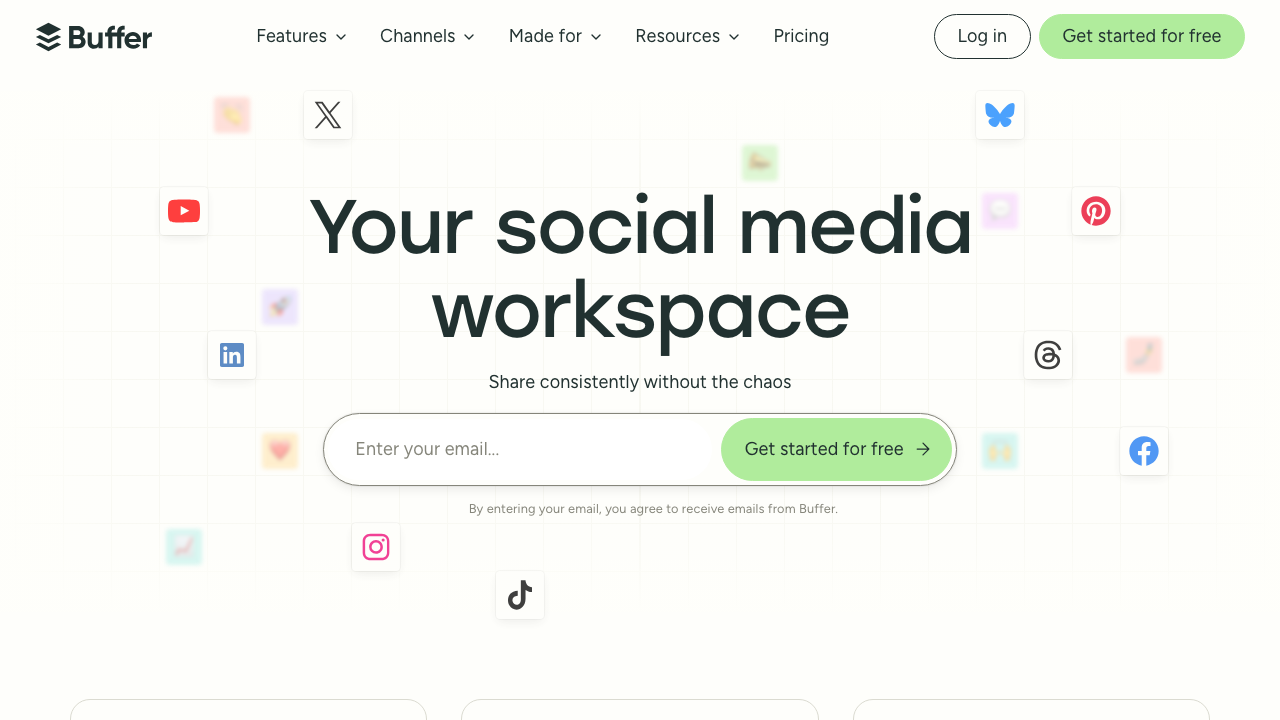
Buffer has a stronger free tier (3 channels, 10 posts each, permanently free) vs RecurPost's no-free-plan model. The interface is cleaner and more polished. The trade-off: Buffer does not do content recycling. If your library of evergreen posts is small and you primarily publish fresh content, Buffer is the simpler and often cheaper choice. If content recycling is central to your strategy, RecurPost's model is better.
3. MeetEdgar
Category: Social media scheduling with content recycling Pricing: Eddie $29.99/mo, Edgar $49.99/mo Best for: Teams that want the original content recycling model with a US-based platform
MeetEdgar pioneered the content recycling concept that RecurPost also uses. RecurPost is typically cheaper at comparable feature levels. MeetEdgar has a longer track record and more name recognition among US-based teams. For teams that want the recycling model but prefer a more established US brand with longer customer history, MeetEdgar is the direct equivalent.
4. SocialBee
Category: Social media scheduling with content categories Pricing: Bootstrap $29/mo, Accelerate $49/mo Best for: Teams wanting content categories and recycling with AI content generation included
SocialBee organizes content into categories (educational, promotional, testimonials, time-sensitive) and rotates them on a schedule, similar to RecurPost's library model. AI content generation is included. More feature-rich than RecurPost at entry level, but more expensive. The right choice when AI-assisted content creation alongside recycling is a priority.
5. Later
Category: Visual social media scheduling Pricing: From $25/mo Best for: Visual-first brands where Instagram is the primary channel
Later is a reasonable RecurPost comparison for Instagram-first brands: similar pricing tier, similar target user (small brands and creators), different platform strengths. Later wins for Instagram grid preview and link-in-bio features. RecurPost wins for multi-platform breadth and content recycling. For LinkedIn and multi-platform teams, RecurPost covers more ground. For Instagram-first creators, Later is the cleaner choice.
6. Zoho Social
Category: Social media management Pricing: Standard $15/mo, Professional $40/mo Best for: Small businesses in the Zoho ecosystem wanting better analytics
Zoho Social is priced comparably to RecurPost but includes better analytics and a social inbox alongside scheduling. It integrates tightly with Zoho CRM, making it valuable for businesses already in the Zoho ecosystem. For teams that want RecurPost's affordability with more feature depth, Zoho Social is worth evaluating. For teams outside the Zoho ecosystem, the integration benefit is less compelling.
Side-by-side: Buffer vs RecurPost (the most common comparison)
| Axis | Winner | Why |
|---|---|---|
| Free tier | Buffer | 3 channels, 10 posts each, permanently free. RecurPost has no free plan. |
| Content recycling | RecurPost | Core differentiator. Buffer has no recycling capability. |
| Interface quality | Buffer | Consistently rated cleanest in the category. |
| Multi-platform breadth | RecurPost | 10 platforms including Threads, Bluesky, Google Business. |
| Analytics | Metricool wins both | Both are limited on analytics. Metricool is the analytics upgrade. |
| LinkedIn buying signals | Neither (try OutX) | Both are scheduling tools. Neither monitors LinkedIn intent signals. |
Where OutX fits in
RecurPost solves the "consistent LinkedIn presence" problem. Most B2B teams discover that consistent presence is necessary but not sufficient for LinkedIn pipeline.
The missing piece is engagement timing: catching the moments when buyers in your ICP post evaluation signals and responding to them before the conversation moves on. RecurPost cannot do that. No scheduler can. That is a different category of tool.
OutX monitors LinkedIn and Reddit for those moments in real time. When a relevant post appears, it scores the fit, drafts a reply, and lets you send from your real account. Paired with RecurPost (or Buffer) for consistent publishing, the combination covers the full B2B LinkedIn motion for around $100-130/mo total.
Bottom line
- Teams publishing mostly evergreen content: RecurPost. Clear winner for the recycling use case.
- Teams wanting a polished free tier for fresh content: Buffer.
- Teams wanting content recycling with AI generation included: SocialBee.
- Teams in the Zoho ecosystem wanting more analytics: Zoho Social.
- Instagram-first visual brands: Later.
- B2B teams that also need LinkedIn buying signal intelligence: RecurPost (or Buffer) plus OutX.
The mistake is treating content recycling as the entire LinkedIn strategy. Publishing keeps you visible. Listening and responding to signals is what converts visibility into pipeline.